In today’s gardening landscape, the use of a Splitter Hose has become essential for efficient watering. Choosing the right Splitter Hose can drastically enhance your watering experience. Gardeners are always on the lookout for effective solutions to optimize their routines.
A high-quality Splitter Hose allows for multiple connections, enabling you to water different areas simultaneously. This can save both time and water. Additionally, using a Splitter Hose can help you manage your irrigation better. Different plants have varied watering needs, and a suitable hose can cater to those requirements.
While many options are available, not all Splitter Hoses are created equal. The market is flooded with products that may not meet durability or performance standards. For instance, some hoses may kink easily, which can disrupt your watering schedule. Assessing a product's reliability is vital. Understanding your garden's unique needs and constraints will lead you to the best options for 2026.
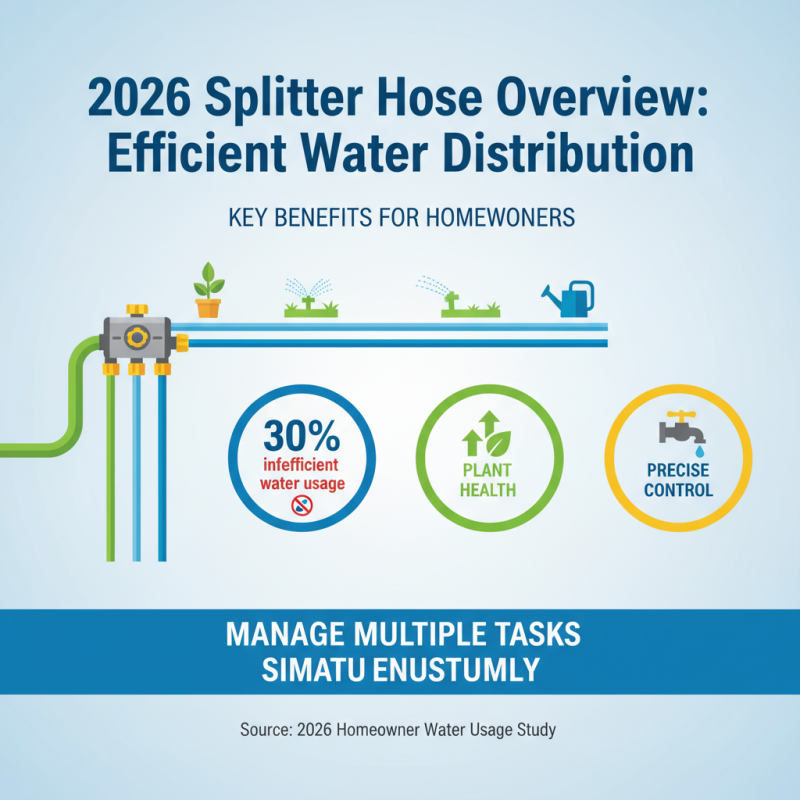
In 2026, the significance of splitter hoses in efficient water distribution cannot be overstated. These tools enable users to manage multiple watering tasks simultaneously. Studies show that nearly 30% of homeowners experience inefficient water usage. This leads to overwatering and undercare, which can diminish plant health. Splitter hoses address this issue by allowing precise control over water allocation.
Different splitter hose types are designed for various applications. A report by the Irrigation Association indicated that effective irrigation could reduce water use by up to 50%. Home gardeners often underestimate their watering needs, resulting in wasted resources. By utilizing splitter hoses, gardeners can optimize their water use. They can target specific areas without over-saturating the ground.
However, the choice of a splitter hose requires careful consideration. Users should examine factors like durability and compatibility with existing systems. Some products may not withstand prolonged exposure to sunlight or varying water pressures. This can lead to failures when they are most needed. Addressing these concerns will improve the overall effectiveness of irrigation systems and enhance water conservation efforts.
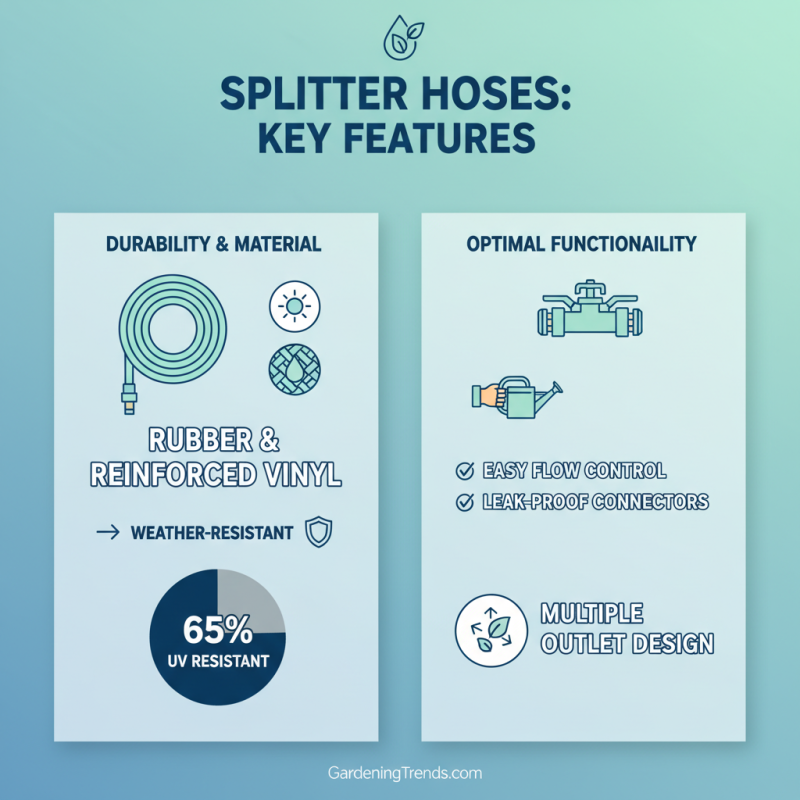
When selecting splitter hoses for efficient watering needs, key features are essential. Firstly, consider the material. A durable, weather-resistant material ensures longevity, especially in varying climates. Rubber and reinforced vinyl are popular options. According to market research, 65% of gardeners prefer hoses with a high resistance to UV rays to avoid premature deterioration.
Next, pay attention to the diameter and length of the splitter hose. A diameter of ¾ inch is generally suitable for delivering sufficient water volume without significant pressure loss. However, longer hoses can compromise flow rates. A study in the Journal of Irrigation Science indicated that flow rates drop by 20% for each additional 100 feet in length.
Look for adjustable flow options, allowing you to customize water output. This feature can be especially helpful in gardens with varying water needs. While many hoses promise flexibility, not all meet industry standards. A manufacturer’s guarantee or warranty can also indicate reliability and quality. However, it's important to note that some hoses with extended warranties may still fail early, leading to frustration. Be vigilant when assessing user reviews, as they provide insights into long-term performance.
When choosing a splitter hose, the material plays a crucial role in performance. Common materials include PVC, rubber, and polyurethane. PVC hoses are lightweight and affordable. However, they can become brittle over time, especially with UV exposure. Rubber hoses are more durable and resistant to wear, but they can be heavier and less flexible.
Polyurethane hoses offer a great balance. They are lightweight, flexible, and resistant to kinking. This makes them easier to maneuver without sacrificing durability. However, some users report that polyurethane can be less robust against extreme temperatures. Each material presents unique advantages and drawbacks, making it essential to consider specific watering needs.
Users often overlook the impact of hose fittings and connectors. Poor-quality fittings can negate the benefits of a high-quality hose. Leaks at connections can waste water and affect efficiency. Therefore, evaluating the full assembly is vital. Comfort in handling and storage options also matter when seeking the best splitter hose for watering. Inconsistent experiences among users highlight the importance of careful consideration when selecting a hose material.
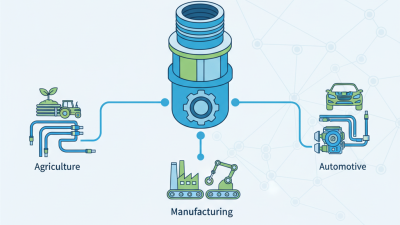
Sustainable practices in the manufacturing of splitter hoses are changing the industry. As water conservation becomes essential, manufacturers are focusing on eco-friendly materials. Many companies are exploring recycled plastics and biodegradable options. This shift is crucial for reducing environmental impact.
In addition to materials, production processes are evolving. Energy-efficient techniques are gaining traction. Some factories now utilize solar energy. This reduces reliance on fossil fuels and lowers carbon emissions. However, challenges remain. Not all manufacturers can afford these upgrades. Smaller companies might struggle to compete with larger firms that have more resources.
Innovation in design is also a focal point. Creating lightweight, durable hoses that require less water for optimal functioning is important. Yet, some models still fall short. Consumers are looking for reliability, but not every product meets these standards. Transparency in sourcing materials and manufacturing processes is vital. This builds trust and encourages responsible purchasing decisions.
When selecting splitter hoses for efficient watering, performance metrics matter. These metrics can enhance your irrigation system's effectiveness. Focus on durability, flow rate, and compatibility with existing fittings. High-quality materials often withstand weather fluctuations better. A well-constructed hose minimizes leaks and prolongs usage.
Consider the flow rate. A higher rate improves water distribution across multiple areas. However, not all plants require the same amount of water. Some may thrive with less. Tailor your setup to meet specific needs. A common mistake is assuming all splitter hoses function the same. Each design offers unique advantages.
Here are essential tips for effective use. Regularly check for leaks. An unnoticed drip can lead to wastage over time. Adjust the nozzle settings based on plant types. Remember, what works for one may not work for another. Lastly, store hoses properly in off-seasons. Avoid direct sunlight to prolong their lifespan. Balancing performance and practicality ensures optimal watering results.
| Model | Material | Length (feet) | Flow Rate (GPM) | Max Pressure (PSI) | Weight (lbs) | Price (USD) |
|---|---|---|---|---|---|---|
| Model A | PVC | 5 | 8 | 100 | 1.5 | 15.99 |
| Model B | Rubber | 10 | 10 | 80 | 2.0 | 24.99 |
| Model C | Polyurethane | 15 | 12 | 120 | 2.5 | 39.99 |
| Model D | Metal | 20 | 15 | 150 | 5.0 | 59.99 |