Leave Your Message

China Best Garden Tool Water Gun Supplier?

Choosing the China Best Garden Tool Water Gun Supplier requires more than comparing catalog prices. Buyers should examine product performance, factory controls, export experience, and after-sales reliability. The Garden Tool Water Gun market is supported by growing interest in household gardening, efficient irrigation, and outdoor maintenance. Grand View Research reports continued expansion in the global gardening equipment market, driven by urban gardening and residential landscaping. Statista also identifies home gardening as a sustained consumer activity in major markets.

A reliable Chinese supplier should provide measurable specifications. These include water-flow range, working pressure, spray patterns, connector compatibility, and leak resistance. A nozzle should feel balanced in the hand, even when the hose is fully pressurized. Materials matter too. Reinforced ABS, stainless-steel components, and corrosion-resistant seals can improve service life. However, product claims need evidence. Ask for inspection records, material descriptions, sample testing, and quality-management information such as ISO 9001 certification.

Industry data can guide decisions, but reports do not replace factory verification. A supplier may show attractive photos while offering inconsistent internal parts. That happens. Buyers should request production samples, carton details, private-label options, and batch-control procedures before placing large orders. The U.S. Environmental Protection Agency’s WaterSense program also highlights the importance of efficient water use, making controlled spray patterns increasingly relevant. The best partner is not always the cheapest one. It is the supplier that communicates clearly, tests honestly, and improves after receiving criticism. That standard is demanding, but it protects both product quality and customer trust.

China Best Garden Tool Water Gun Supplier?

What Is a Garden Tool Water Gun and How Is It Used?

China Best Garden Tool Water Gun Supplier?

What Is a Garden Tool Water Gun and How Is It Used?

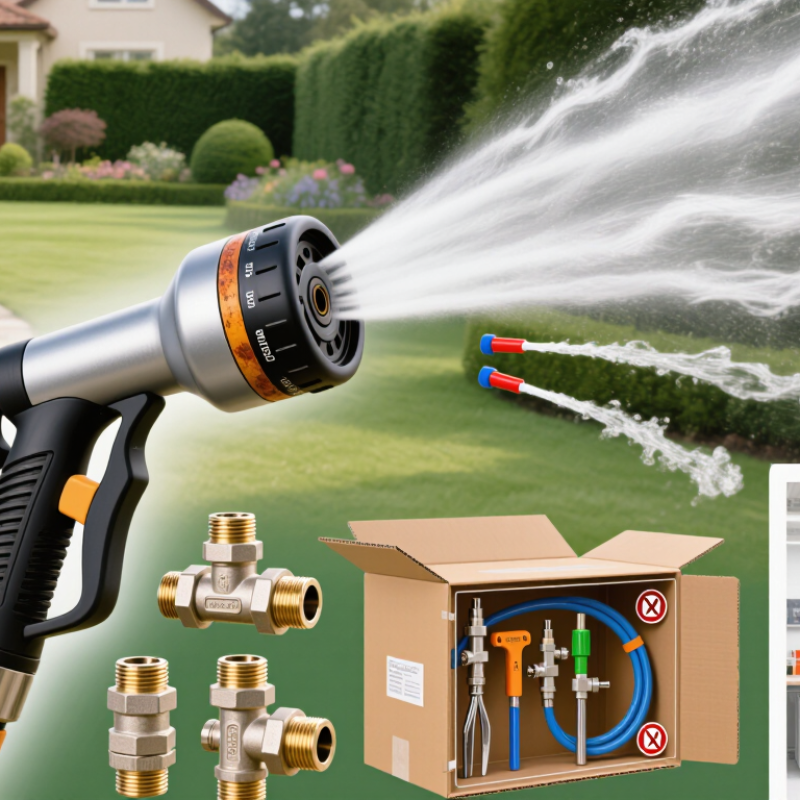
A garden tool water gun is a handheld nozzle attached to a standard hose. It controls water flow through a trigger, valve, or rotating spray head. Common settings include mist, shower, jet, and cone. Each pattern suits a different task. Mist can cool seedlings, while a gentle shower waters flower beds without disturbing soil. A narrow jet helps rinse mud from paving, but it should not replace a pressure washer.

The U.S. Environmental Protection Agency reports that landscape irrigation uses nearly 9 billion gallons of water daily in the United States. It also estimates that up to 50% may be wasted through evaporation, runoff, or poor maintenance. This makes flow control important when evaluating a garden tool water gun supplier. Look for corrosion-resistant parts, a secure hose connector, an ergonomic grip, and a trigger that does not stick. In practical use, cheap plastic may feel light, yet it can crack after repeated sun exposure. That detail is easy to miss.

Tips: Test the connector before full use. Start with low pressure. Water near the soil, not the leaves, during hot weather. Clean mineral deposits from the spray openings monthly. Check whether the listed flow rate was measured under real operating pressure. It often was not.

Key Features of a Reliable China-Based Water Gun Supplier

A reliable China-based water gun supplier should offer more than a low quotation. The U.S. EPA reports that outdoor water use represents about 30% of household consumption. This makes spray control, leak prevention, and water efficiency important purchasing factors. A dependable supplier should provide clear flow-rate data, pressure limits, nozzle options, and material specifications. Ask for test records before approving production.

Factory experience matters. Inspect how workers check trigger strength, hose connections, and seal performance. Request samples from different production batches, not only one polished sample. Grand View Research projects the global gardening tools market to grow at roughly 4.6% annually through 2030. This growth increases supplier competition, but competition does not guarantee consistent quality. Reliable manufacturers normally maintain documented inspections, traceable materials, and quality systems aligned with ISO 9001 practices. Still, no supplier is flawless. A missing inspection photo or vague tolerance can become an expensive problem.

Tips: Test the water gun for leakage after repeated trigger cycles. Confirm carton drop testing and moisture-resistant packaging. Review response times during a small trial order. If communication becomes unclear, pause. A cheaper unit may fail after several outdoor uses. Also check whether the supplier can adjust spray patterns without weakening the internal seal. Practical testing is often more valuable than attractive catalog pictures.

How to Compare Product Quality, Materials, and Spray Performance

China Best Garden Tool Water Gun Supplier?

How to Compare Product Quality, Materials, and Spray Performance

A reliable water gun should feel balanced, not hollow or awkward. When comparing suppliers, request production samples from the same model. Check the trigger, connector, seal, and nozzle by hand. The trigger should move smoothly and return without sticking. Small defects often appear around threaded joints.

Material selection affects service life. Inspect whether the body uses durable engineering plastic or thin, brittle plastic. A strong connector should resist cracking when tightened repeatedly. Rubber seals must remain flexible after exposure to water and sunlight. Ask for material specifications, sample inspection records, and batch consistency. A polished surface alone proves very little.

Spray performance needs practical testing. Connect each sample to the same hose and water source. Measure leakage, spray distance, coverage, and pattern stability. Test mist, jet, and fan settings several times. A useful water gun should change modes cleanly. I once judged a sample by pressure alone, which was a mistake. High pressure did not guarantee an even spray. Some nozzles wasted water near the connector. Check performance after repeated trigger cycles, too. Suppliers should explain test methods, tolerances, and replacement procedures clearly. Their answers may reveal more than attractive packaging.

How to Compare Garden Water Gun Quality

The chart uses a normalized 0–100 benchmark based on material durability, seal and leak resistance, and spray consistency under a comparable 3-bar water-pressure test. Metal-bodied tools generally provide stronger impact resistance, while reinforced ABS models offer lower weight and competitive spray control.

OEM, Customization, Certifications, and Order Requirements

China Best Garden Tool Water Gun Supplier?

Choosing a reliable China garden tool water gun supplier requires more than comparing unit prices. Experienced buyers inspect spray patterns, trigger comfort, connector fit, and leak resistance. Request a working sample before approving production. Test it with your planned hose, water pressure, and outdoor temperature. Small mismatches can cause returns.

OEM projects should begin with clear drawings, material requirements, colors, logos, packaging, and target markets. A capable supplier can adjust nozzle settings, handle shapes, labels, and carton dimensions. Ask for sample approval records and a written change-control process. Customization takes time. Rushed approvals create expensive mistakes. Some buyers focus too heavily on appearance and overlook grip fatigue during repeated use.

Certification documents need careful review. Request current reports, issuing laboratory details, product scope, and matching model numbers. Requirements may differ by destination, material, and packaging. ISO 9001 can support process control, but it does not prove every product’s performance. Confirm applicable safety and environmental requirements independently. Order discussions should cover MOQ, sample charges, tooling costs, lead time, payment terms, inspection standards, spare parts, and warranty handling. A pre-shipment inspection can check leakage, spray function, color consistency, and carton strength. No supplier is perfect. Transparent communication matters more than impressive promises.

China Best Garden Tool Water Gun Supplier? - OEM, Customization, Certifications, and Order Requirements

Evaluation Dimension Typical Requirement or Specification OEM and Customization Options Order and Verification Notes
Product Type Handheld garden water gun, hose nozzle, trigger sprayer, or multi-pattern spray gun. Select ergonomic handle shapes, trigger styles, spray heads, locking mechanisms, and connection formats. Confirm whether the product is intended for household gardening, landscape maintenance, vehicle washing, or general cleaning.
Main Materials Common materials include ABS or polypropylene for the body, thermoplastic elastomer for grip areas, stainless steel for springs, and rubber or silicone for seals. Material color, surface texture, recycled-content options, soft-grip compounds, and metal-plated or painted details may be specified. Request material declarations and test reports when the destination market restricts specific substances.
Water Pressure Many household garden hose systems operate at approximately 2–6 bar, depending on the water supply and hose installation. Nozzle design can be adjusted for flow control, spray reach, and spray concentration within the safe working range. Define the minimum and maximum working pressure and require leak, burst, and trigger-cycle testing before approval.
Spray Patterns Common patterns include mist, cone, shower, flat fan, jet, center, and full spray. The number of patterns, selector markings, spray angle, and flow-control configuration can be customized. Verify that the selector rotates smoothly and that each pattern remains stable at the specified pressure.
Hose Connection Common connection sizes include 1/2-inch and 3/4-inch hose systems; regional fittings may differ. Thread type, adapter configuration, quick-connect compatibility, and sealing washer materials can be selected. Provide the target market, hose standard, thread drawing, or a physical reference fitting before tooling or mass production.
Dimensions and Weight A typical handheld spray gun is approximately 15–25 cm long and may weigh about 150–400 g, depending on materials and functions. Handle length, trigger position, grip diameter, product weight, and packaging dimensions may be optimized for the target user. Approve a dimensioned drawing and a pre-production sample before finalizing the carton and shipping calculations.
Color and Finish Injection-molded colors, matte finishes, gloss finishes, and soft-touch grip surfaces are commonly available. Custom color matching can be based on a physical sample or an internationally recognized color reference system. Confirm color tolerance, surface defects, logo placement, and whether separate colors require additional production quantities.
Private Label and Artwork Packaging may include a paper card, color box, printed sleeve, barcode label, instruction sheet, or shipping carton. Custom artwork, product labeling, molded symbols, laser marking, pad printing, and barcode placement may be available. Submit editable artwork with dimensions, color references, language requirements, barcode data, and mandatory warnings.
Product Performance Tests Typical checks include water leakage, spray uniformity, connection fit, trigger operation, selector durability, and visual inspection. Inspection criteria, sampling levels, test pressure, cycle count, and acceptable defect limits can be agreed in the quality specification. Use an approved sample as the production reference and request inspection records for each shipment or production batch.
Certifications and Compliance Depending on the destination, buyers may request REACH or RoHS-related material documentation, packaging compliance, or a supplier quality-management certificate. Compliance documentation can be prepared for the selected materials, packaging, and intended market requirements. A certificate is not automatically required for every garden water gun. Confirm applicable laws, test scope, validity, and issuing laboratory before placing an order.
Tooling and Development Existing molds can shorten development time; a new mold is needed for a substantially different body, spray head, or connection design. Possible changes include product geometry, mold texture, logo integration, color arrangement, and internal water-channel design. Clarify mold ownership, maintenance responsibility, revision approval, lead time, and whether tooling costs are refundable or offset against orders.
Minimum Order Quantity Stock items may support lower quantities, while customized colors, packaging, or tooling usually require higher quantities. For custom projects, an initial negotiation range of approximately 500–1,000 units is common, but the final quantity depends on the product and packaging. Request separate quantities for standard products, custom colors, printed packaging, and new-mold development.
Sample Approval A functional sample should demonstrate connection fit, spray patterns, trigger control, sealing performance, and appearance. Samples may be produced with standard components first, followed by color, artwork, or pre-production samples for approval. Record all approved details in a signed specification or purchase agreement before mass production begins.
Lead Time Production time varies with product availability, order quantity, customization, tooling, and packaging complexity. Custom development adds time for drawings, mold trials, sample revisions, color matching, and packaging proofing. Obtain a schedule covering sample approval, material preparation, production, inspection, packing, and shipment booking.
Packaging and Shipping Packaging should protect the trigger, spray selector, threaded connector, and surface finish during handling and transport. Inner boxes, master cartons, inserts, pallet configuration, carton marks, and shipping labels can be specified. Confirm carton dimensions, gross and net weight, pallet requirements, delivery term, export documents, and destination labeling rules.
Information Required for Quotation Product type, spray patterns, hose connection, target quantity, packaging method, destination country, and required delivery date. Add drawings, reference samples, color requirements, artwork, material preferences, and desired functional changes. A complete inquiry enables accurate pricing, tooling evaluation, compliance review, sample planning, and delivery estimation.
Recommended Supplier Selection Criteria Evaluate product consistency, material traceability, testing capability, mold management, packaging control, and export experience. Prioritize suppliers that can provide engineering drawings, samples, inspection reports, customization support, and documented change control. Compare quotations using the same specification and verify samples, compliance documents, production capacity, payment terms, and after-sales responsibilities.

Note: Specifications, certifications, minimum order quantities, pricing, and lead times vary by product design, destination market, order volume, and customization level. Confirm all details with the selected supplier before purchase.

How to Select the Best Supplier for Your Garden Tool Business

Choosing the best garden tool water gun supplier requires more than comparing unit prices. Grand View Research projects steady growth in the global gardening equipment market through 2030, increasing competition among suppliers. For a garden tool business, request factory audits, production photos, and recent inspection records. Check the water gun’s spray patterns, trigger strength, connector fit, and leak rate. A sample should survive repeated testing, not only look attractive in a catalog. Ask for flow-rate data at different water pressures. Small differences can affect customer satisfaction and water consumption.

Water efficiency also deserves attention. The U.S. Environmental Protection Agency’s WaterSense program states that qualified products use at least 20% less water while maintaining performance. A supplier should provide measurable flow data, material specifications, and clear testing methods. Confirm whether plastic parts resist cracking after sunlight exposure and temperature changes. Packaging matters too; weak cartons often arrive crushed after long-distance shipping. I have seen attractive samples fail during repeated trigger testing. That mistake is expensive. Do not trust one successful sample.

A reliable supplier communicates quickly, accepts reasonable quality inspections, and explains production limits honestly. Review its delivery records, minimum order quantity, spare-part policy, and complaint response process. Request a small trial order before committing to volume. The cheapest quotation may hide unstable materials, inconsistent assembly, or delayed shipment. A written quality agreement should define acceptable leakage, color variation, packaging damage, and replacement terms. Supplier selection is not perfect. Leave room for rechecking assumptions.