


Which Garden Sprinklers Stand Out for Both Small and Large Lawns?
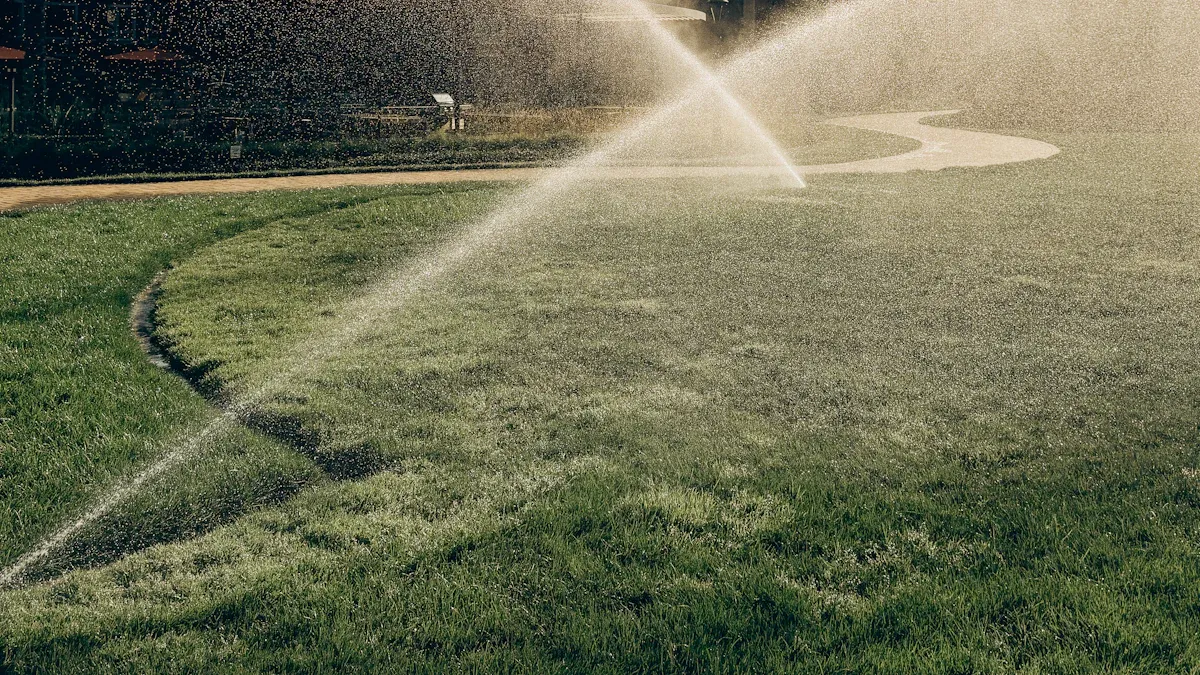
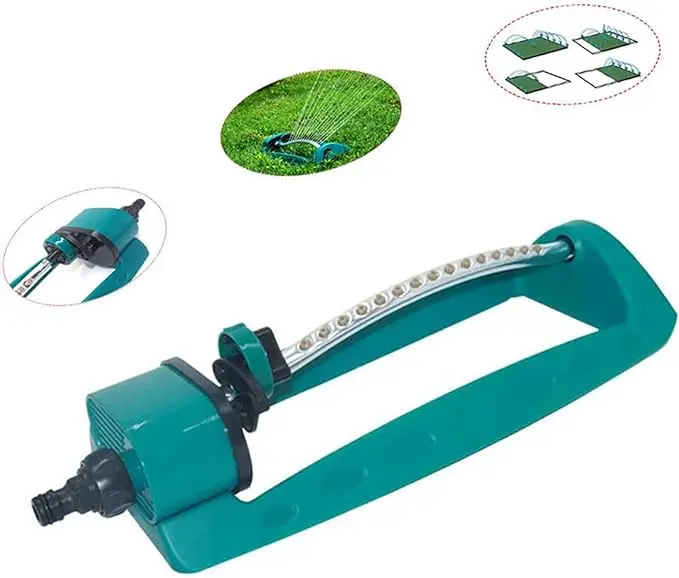
A garden sprinkler can make watering much easier. People often choose the Melnor Sprinkler with Tripod, Dramm 9-Pattern Turret Sprinkler, or Orbit Heavy Duty Brass lawn sprinkler for great results. These options help keep grass green. An irrigation sprinkler or water lawn sprinkler helps plants stay healthy.
Key Takeaways
- Choose a sprinkler based on your lawn size: stationary or oscillating models work best for small yards, while rotary or traveling sprinklers suit large lawns.
- Look for adjustable features like spray pattern, distance, and height to fit different lawn shapes and save water by targeting dry spots.
- Maintain your sprinkler regularly by cleaning nozzles and checking for leaks to ensure long-lasting performance and healthy plants.
Garden Sprinkler Features That Matter
Coverage Area
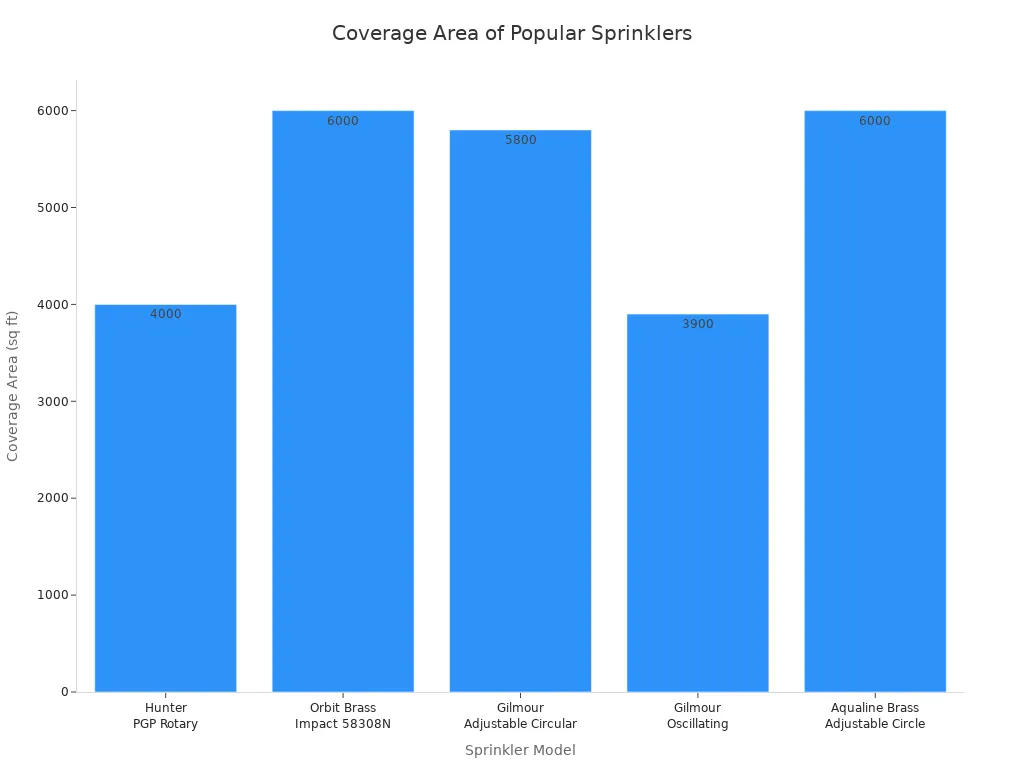
Choosing the right garden sprinkler starts with knowing how much ground it can cover. Some models work best for small yards, while others reach across large lawns. The table below shows how different sprinklers compare in coverage area and spray distance.
| Sprinkler Model | Type | Typical Coverage Area (sq ft) | Spray Distance / Radius | Key Features / Notes |
|---|---|---|---|---|
| Hunter PGP Rotary Sprinklers | Rotary | Up to ~4000 | Adjustable radius and arc | Uniform water, adjustable arc, great for small to medium yards |
| Orbit Brass Impact 58308N Tripod | Impact | Up to ~6000 | Adjustable spray range 0-360° | Heavy-duty, adjustable tripod, covers larger areas |
| Gilmour Adjustable Circular Tripod | Circular Tripod | Up to 5,800 | Spray distance up to 43 feet | Adjustable spray, stable base, covers large lawns |
| Gilmour Oscillating Sprinkler | Oscillating | Up to 3,900 | Adjustable spray length/width | Durable, adjustable, ideal for small to medium gardens |
| Aqualine Brass Adjustable Circle | Impact | ~5500-6000 | Adjustable spray 20°-340° | Heavy-duty brass, adjustable nozzle, good for large lawns |
Adjustability
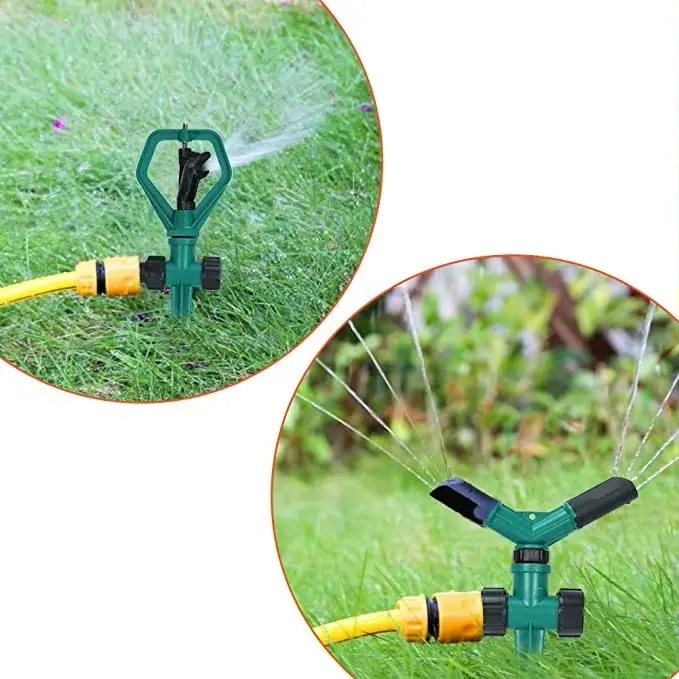
Adjustability helps a garden sprinkler fit different lawn shapes. Some sprinklers let users change the spray pattern, arc, or distance. For example, rotary models like the Hunter PGP allow people to set the arc and radius. This means they can water only the areas that need it, which saves water and avoids dry spots. Impact Sprinklers also let users set partial or full circles, making them flexible for odd-shaped yards.
Durability
A garden sprinkler should last through many seasons. Most durable models use metal parts, such as brass or stainless steel, which resist rust and damage. PVC is common too, but it can crack in extreme weather. Good sealing, like O-rings and gaskets, keeps water inside and protects the sprinkler from leaks. With regular care, a quality sprinkler can last 10 to 20 years.
Tip: Regularly check for leaks and clean nozzles to keep your sprinkler working longer.
Water Pressure Requirements
Sprinklers need the right water pressure to work well. Spray heads usually need about 30 psi, while rotors work best at 45 psi. Too much pressure can cause misting and waste water. Too little pressure means poor coverage. Using pressure-regulated heads helps keep water use efficient and lawns healthy.
| Sprinkler Type | Optimal Pressure (psi) | Operating Pressure Range (psi) |
|---|---|---|
| Spray Heads | 30 | 15 - 30 |
| Rotors | 45 | 25 - 65 |
| Drip Lines | 20 | 15 - 30 |
Compatibility
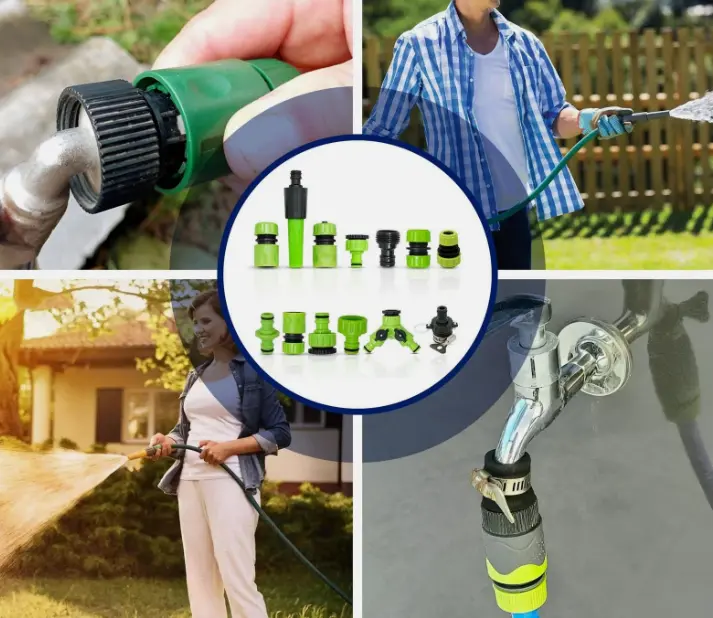
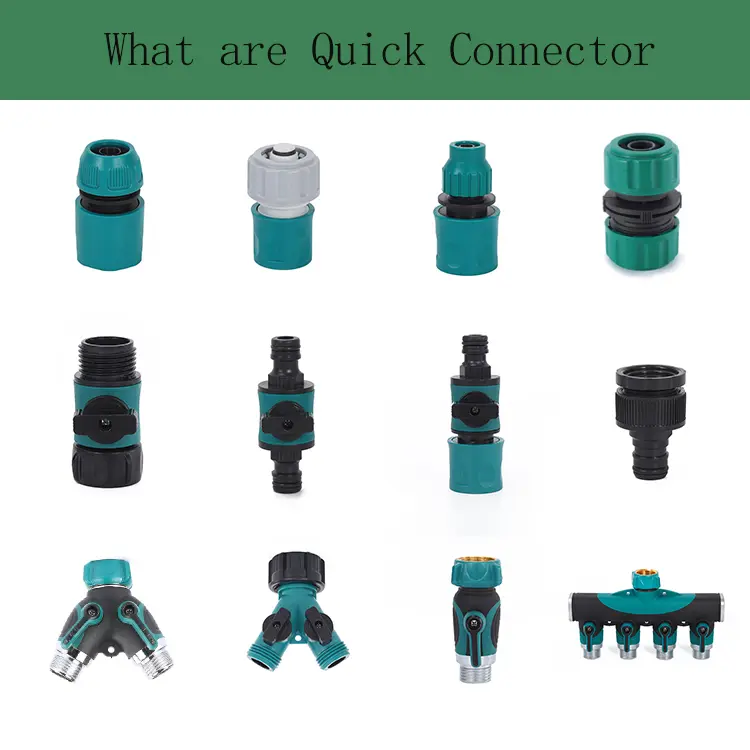
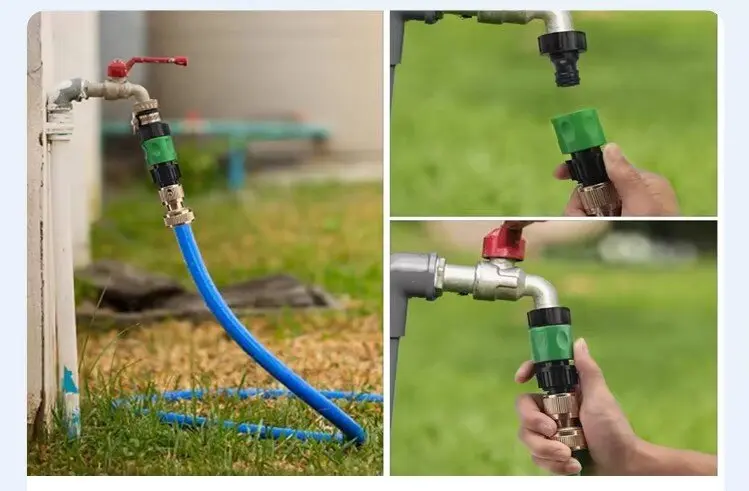
Not every garden sprinkler fits every hose or system. Some work only with certain hose sizes or connectors. Before buying, check if the sprinkler matches the garden’s water supply and hose type. This step helps avoid leaks and ensures the sprinkler works as expected.
Best Garden Sprinkler for Small Lawns
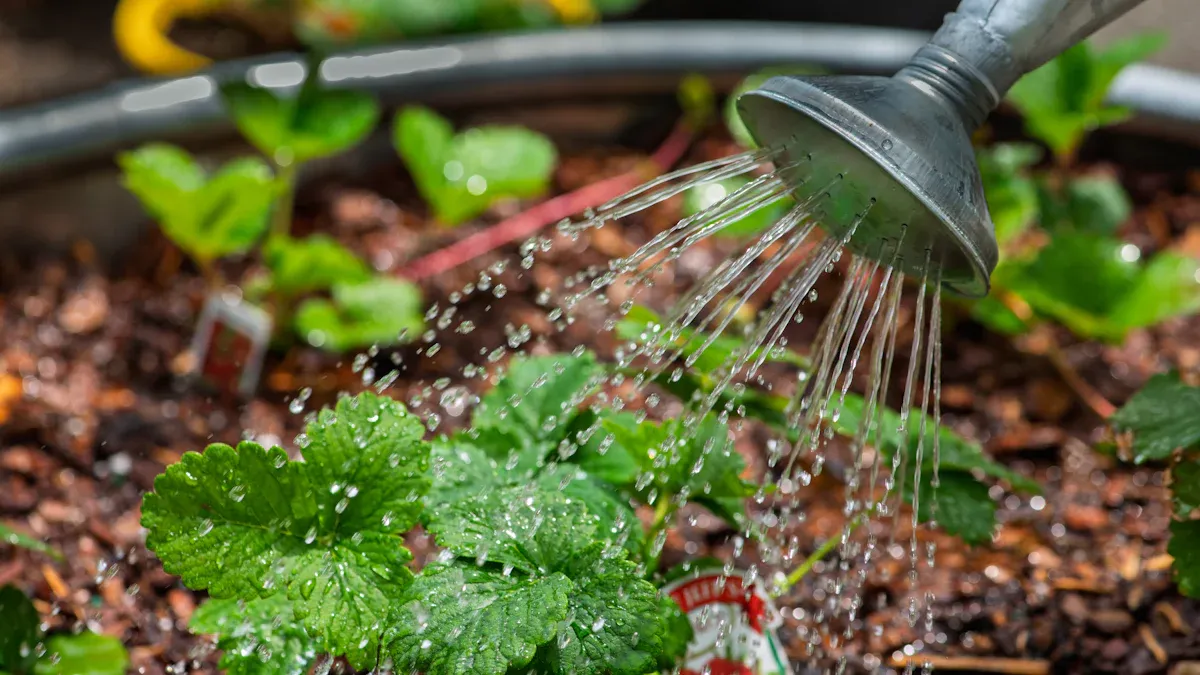
Dramm 9-Pattern Turret Sprinkler
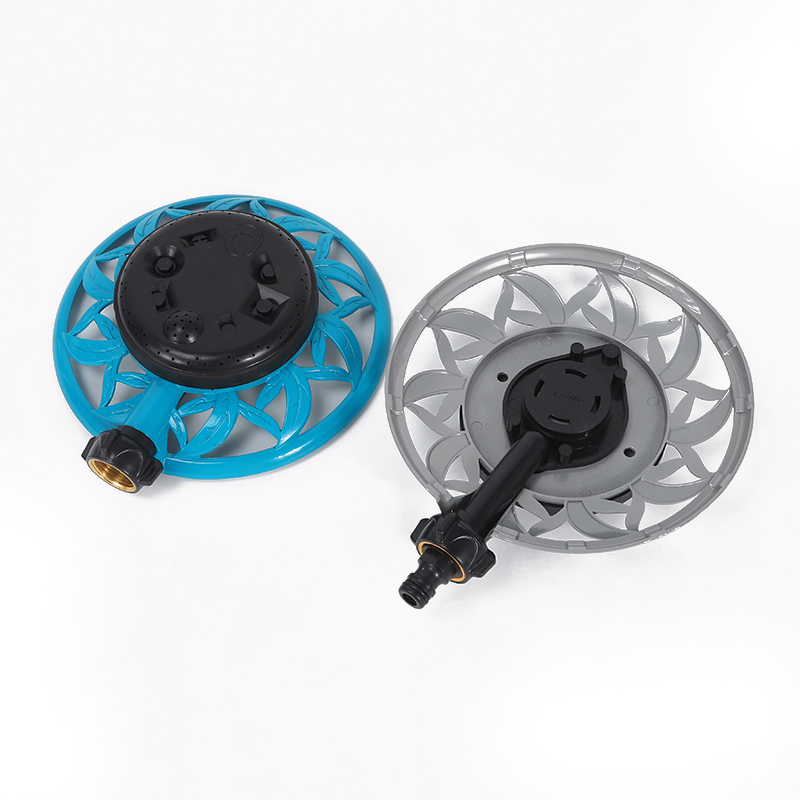
The Dramm 9-Pattern Turret Sprinkler stands out for small lawns. It gives users nine different spray patterns, so they can water just the spots that need it. This sprinkler works well for odd-shaped yards or gardens with flower beds. People can turn the dial to pick the best spray shape for their space. The heavy-duty metal base keeps the sprinkler steady, even when water pressure changes. It also has a sieve to block debris, which helps it last longer. Many homeowners like that it works with low water pressure and does not move around during use.
- Nine spray patterns for precise watering
- Adjustable dial for different lawn shapes
- Heavy-duty metal base for stability
- Works well with low water pressure
- Sieve keeps out debris for better performance
Stationary and Bubbler Sprinklers
Stationary sprinklers give a steady spray in one pattern. They cover small lawns or odd corners well. These sprinklers help water reach every part of the yard evenly. Bubbler sprinklers work differently. They send water slowly right to the roots. Bubblers save water but only cover a small area, about five feet across. For most small lawns, stationary sprinklers do a better job because they cover more ground and keep the grass healthy.
Tip: Use a stationary sprinkler for even coverage on small lawns. Save bubblers for flower beds or shrubs.
Rainbird and Hunter Pop-Up Sprinklers
Rainbird and Hunter pop-up sprinklers offer another good choice for small lawns. These sprinklers stay hidden until turned on. They pop up to water the grass and then drop back down. This keeps the yard looking neat. Pop-up sprinklers work best for small, flat lawns. They give even water coverage and can be set to spray in certain directions. Many people use them in both home gardens and public parks.
Best Garden Sprinkler for Large Lawns
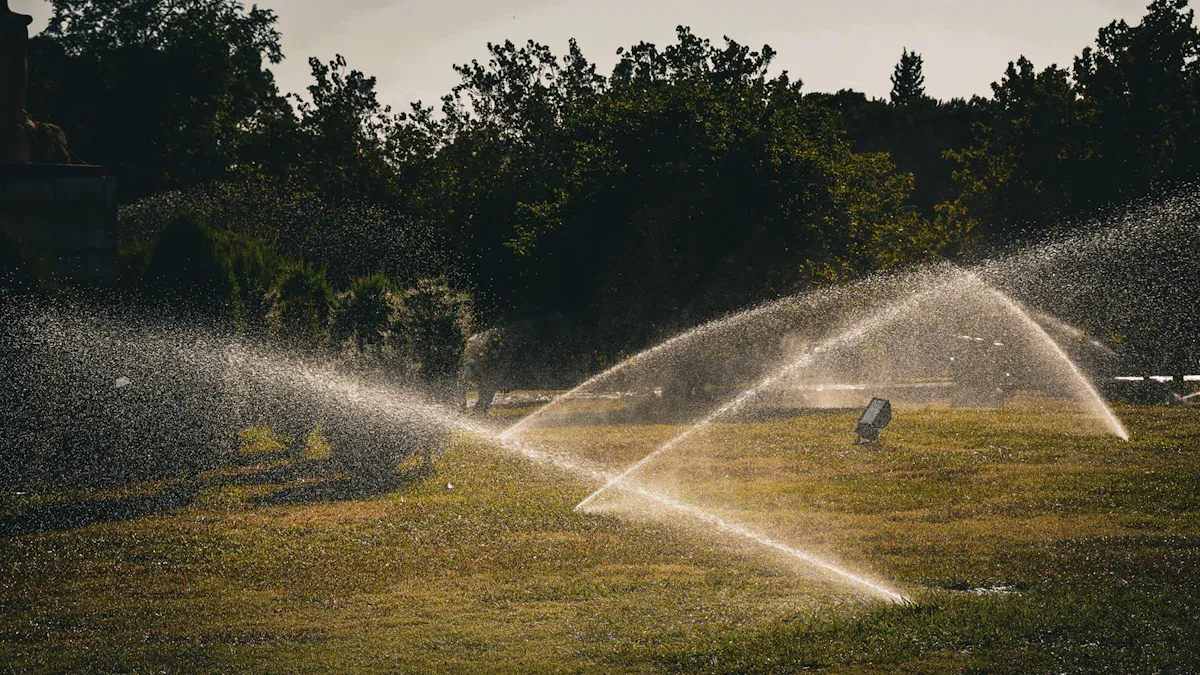
Orbit Heavy Duty Brass Lawn Sprinkler
The Orbit Heavy Duty Brass Lawn Sprinkler stands out for big yards. It covers up to a 90-foot diameter, which means it can water about 6,360 square feet in one go. Homeowners can adjust the spray from a small section to a full circle. The sprinkler has a deflector shield and a diffuser screw, so users can change the spray distance and pattern. The heavy-duty brass body resists rust and breakage, making it last for years. People can also connect more than one sprinkler to cover even larger areas.
| Feature | Details |
|---|---|
| Coverage Diameter | Up to 90 ft. diameter |
| Coverage Area | About 6,360 sq. ft. (full circle) |
| Coverage Adjustment | Partial section to full 360° watering |
| Spray Customization | Deflector shield and diffuser screw |
| Flow-Through Outlet | Connects multiple sprinklers |
| Construction Material | Heavy-duty brass |
| Extra Features | Anti-backsplash arm, clog-resistant design |
Tip: Use the flow-through outlet to link several sprinklers for extra-large lawns.
Traveling Sprinklers
Traveling sprinklers work well for people who want to water large lawns without moving the sprinkler by hand. These sprinklers use water pressure to move across the yard on wheels. They do not need electricity. Most models connect to a standard garden hose and can cover up to 200 feet in length and 90 feet in width. Users can set the speed and let the sprinkler shut off automatically when finished. This type of garden sprinkler is great for medium to large lawns, gardens, or even sports fields.
| Feature | Description |
|---|---|
| Operation | Moves on wheels, powered by water flow |
| Coverage Area | Up to 200 ft long, 90 ft wide |
| Water Pressure | 30-60 PSI |
| Hose Connection | Standard 3/4 inch hose |
| Speed Control | Variable |
| Shut Off | Automatic |
| Best For | Medium to large lawns, gardens, small farms, sports fields |
Impact Sprinklers
Impact sprinklers offer strong, even watering for large lawns. They can reach up to a 75-foot radius, which covers a lot of ground. The spray stays low, so wind does not blow the water away. These sprinklers work well with different water types and rarely clog. Most impact sprinklers use metal parts, so they last a long time. People like them because they cost less and are easy to use. The head spins with water force, so no extra power is needed. Users can adjust the spray to water only the spots that need it.
- Covers a large area, up to 75 feet radius
- Strong, low spray for less wind drift
- Handles hard water without clogging
- Made from durable metal for long life
- Adjustable spray for custom watering
- Cost-effective and easy to maintain
Top Garden Sprinkler for Both Small and Large Lawns
Melnor Sprinkler with Tripod
The Melnor Sprinkler with Tripod stands out as a favorite for many homeowners. This garden sprinkler sits on a sturdy tripod, so it can reach over tall plants and cover wide areas. People can adjust the height from low to high, making it easy to water both small patches and large lawns. The tripod legs fold up for storage, which helps save space in the shed or garage.
Users like how the Melnor Sprinkler with Tripod lets them change the spray pattern and distance. They can set it for a gentle mist over a flower bed or a strong stream across a big yard. The tripod design keeps the sprinkler steady, even on uneven ground. Many families find this garden sprinkler works well for both small gardens and big backyards because it adapts to different needs.
Tip: Raise the tripod higher to water large areas or lower it for small spots and flower beds.
Adjustable Range Sprinklers
Adjustable range sprinklers give people the power to control how much of the lawn gets watered. These sprinklers let users change the spray radius, width, and even the direction. For example, the LINEX impact sprinkler has settings for spray distance and pattern, so it can water a tiny patch or a whole field. Some models, like the Rain Bird 1804NPPRS, offer spray patterns from a narrow angle up to a full circle and can reach up to 15 feet.
This flexibility means families do not need a different sprinkler for every part of the yard. They can use one adjustable range sprinkler for both small and large spaces. Many customers say these sprinklers work in almost every yard. One person shared that they could target dry spots that other systems missed, showing how precise the coverage can be.
- Adjustable spray patterns fit any lawn shape.
- Users can connect more than one sprinkler for extra-large areas.
- Changing the spray distance helps save water and avoid overwatering.
Adjustable nozzles and spray radius make these sprinklers a smart choice for anyone who wants to water different parts of the yard without moving equipment around all the time.
Smart Sprinkler Options
Smart sprinkler options bring technology into the garden. These systems use sensors and weather data to decide when and how much to water. Some smart controllers change the watering schedule based on rain, temperature, or even the type of plants in the yard. They can stop watering if it rains or if the soil is already wet, which helps save water and keeps plants healthy.
Many smart sprinklers connect to a smartphone app. People can set up watering zones, change the schedule, or turn the system on and off from anywhere. Some even work with voice assistants like Alexa or Google Assistant. This makes it easy to control the garden sprinkler without going outside.
- Smart systems use real-time weather and soil data for precise watering.
- Apps let users manage watering zones and schedules from their phones.
- Rain and moisture sensors help avoid wasting water.
- Voice control and remote access add convenience for busy families.
These smart features help people water lawns of any size. The system can adjust for a small garden or a large backyard, making sure every area gets just the right amount of water.
Garden Sprinkler Product Comparison
Features Overview
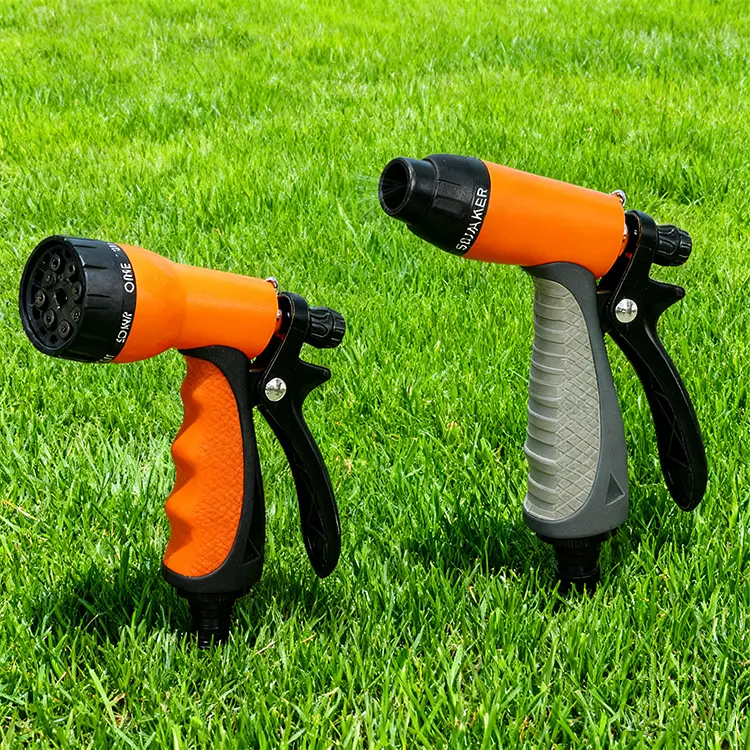
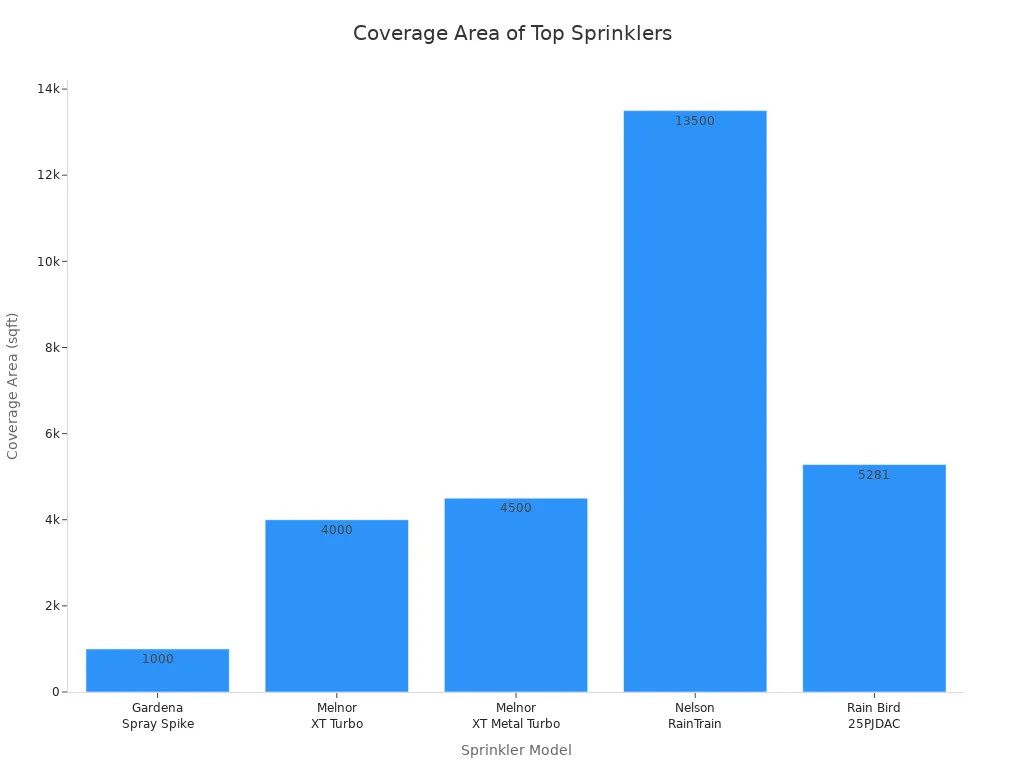
Garden sprinklers come in many shapes and sizes. Some models, like the Rain Bird 25PJDAC Brass Impact Sprinkler, offer full and part-circle coverage with adjustable spray distance. Others, such as the Melnor XT Metal Turbo Oscillating Sprinkler, provide up to 20 nozzle options and a sturdy metal base. Coverage ranges from small areas (1,000 sqft) to very large lawns (13,500 sqft). Durability depends on materials—brass and metal last longer than plastic. The Biswing Impact Sprinkler Head on Tripod Base covers wide areas and resists rust, but may need extra support for stability.
Pros and Cons
User reviews show that each sprinkler type has strengths and weaknesses.
| Sprinkler Type | Pros | Cons |
|---|---|---|
| Rotary | Wind-resistant, adjustable patterns | Needs higher water pressure |
| Bubbler | Gentle, precise watering | Small coverage area |
| Impact | Durable, customizable, large coverage | Noisy, strong stream, needs frequent moving |
| Oscillating | Even coverage, adjustable width/range | Heavy, wind-affected |
| Traveling | Hands-free, covers large areas | Struggles on soft ground, hose needs repositioning |
| In-ground | Large coverage, automatic timer | Connector leaks, limited expandability |
| Stationary | Affordable, durable, easy to use | Small area, must move often |
Note: Impact sprinklers work well for big lawns but can be loud. Oscillating models suit flower beds and rectangular yards.
Ideal Use Cases
Choosing the right sprinkler depends on the yard’s shape and size.
| Sprinkler Type | Best Use Case | Key Features & Pros | Example Model & Notes |
|---|---|---|---|
| Stationary (Fixed) | Small, irregular lawns/gardens | Multiple spray patterns, good for low pressure | Dramm 9-Pattern Turret: covers nearly any shape |
| Sprinkler Hoses | Narrow, curved, irregular areas | Flexible placement, localized watering | Useful for borders and curved spaces |
| Rotary | Large, open, circular lawns/gardens | Even coverage, gentle watering | Dramm 3-Arm Whirling: best for circular areas |
| Oscillating | Rectangular or square lawns/gardens | Adjustable coverage, consistent watering | Dramm Metal Oscillating: top for rectangles |
| Traveling | Large, flat areas | Hands-free, covers big spaces | Needs monitoring and steady water pressure |
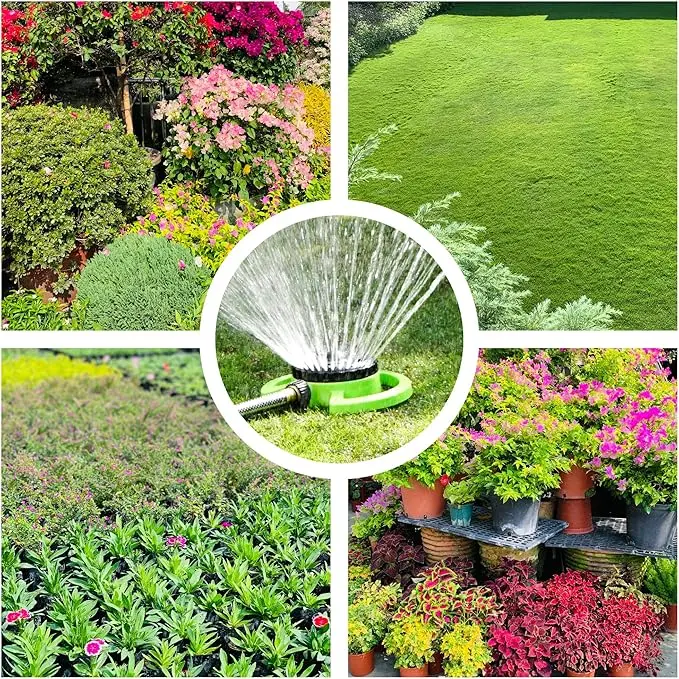
A garden sprinkler with adjustable features works for mixed plantings and odd-shaped lawns. Rotary and oscillating models suit bigger, open spaces. Stationary and hose sprinklers fit small or tricky spots.
How to Choose the Right Garden Sprinkler
Assessing Yard Size
Homeowners often start by looking at the size and shape of their yard. They measure the area to figure out how much ground needs watering. People check for obstacles like trees, flowerbeds, or patios that might block water flow. Slopes or uneven ground can change how water spreads, so they keep an eye out for those features.
- Size and layout affect how many zones a sprinkler system needs.
- Obstacles like trees or garden beds may require special placement.
- Slopes need sprinklers that can handle uneven water distribution.
Matching Sprinkler Type to Needs
Different yards call for different sprinkler types. Rotary heads work well for large areas and uneven terrain because they offer wide coverage and adjustable spray patterns. Spray heads fit small or medium lawns, flower beds, and narrow strips, giving precise and uniform watering. Soaker heads, also known as drip irrigation, suit deep-rooted plants and slopes, delivering water slowly to the roots. Bubblers help trees and shrubs by sending water right to the base.
| Sprinkler Type | Best For | Key Features |
|---|---|---|
| Rotary Heads | Large lawns, slopes | Adjustable, wind-resistant |
| Spray Heads | Small lawns, beds | Precise, low profile |
| Soaker Heads | Deep roots, slopes | Water efficient |
| Bubblers | Trees, shrubs | Direct root watering |
Practical Selection Tips
People avoid common mistakes by planning their lawn layout and marking obstacles before installing a garden sprinkler. They test soil drainage to pick the right sprinkler type and manage water pressure with regulators. Choosing quality parts helps prevent leaks and clogs. Homeowners space sprinkler heads correctly and adjust spray patterns to avoid overwatering. They do not mix different sprinkler types in the same zone, which keeps watering even. Installing rain shutoff devices saves water during rainy days.
Tip: Regular maintenance, like cleaning filters and checking for leaks, keeps the system working well all year.
Choosing the right Garden Sprinkler makes watering easy and keeps lawns healthy. Small yards do best with stationary or oscillating models, while large spaces need rotary or traveling sprinklers. Matching sprinkler features to yard size saves water and prevents waste. Regular cleaning and using timers help every lawn thrive.
FAQ
What sprinkler works best for oddly shaped lawns?
A turret or adjustable range sprinkler fits odd shapes. Users can change the spray pattern to reach corners and curves. This helps water every spot.
How often should someone clean a garden sprinkler?
People should check and clean their sprinkler every month. Removing dirt and debris keeps water flowing and helps the sprinkler last longer.
Can a garden sprinkler save water?
Yes! Many sprinklers have adjustable settings. Users can target dry spots and avoid overwatering. Smart sprinklers use weather data to water only when needed.