Choosing the right Splitter Hose for global sourcing requires more than comparing catalog prices. A hose may look suitable, yet fail under heat, pressure, vibration, or repeated bending. Dr. Lena Hart, a hose-design engineer, explains: “A Splitter Hose is only reliable when its weakest connection matches the whole system.” This principle deserves attention during every supplier review.
Begin with the working environment. Check fluid type, operating pressure, temperature range, bend radius, and connection size. Confirm whether the hose needs abrasion resistance, oil resistance, or flame-retardant materials. Small differences matter. A two-millimeter mismatch can create leakage, delays, and expensive rework.
Supplier evidence should support every technical claim. Request material specifications, dimensional drawings, pressure-test results, batch traceability, and inspection records. Review the fitting design closely. Threads, clamps, seals, and hose reinforcement must work together. Packaging also matters during ocean transport, especially in humid conditions.
Global sourcing adds practical risks. Minimum order quantities may exceed real demand. Production samples may not represent full batches. This is where careful judgment becomes important. I have seen buyers focus on unit price and overlook replacement lead times. That choice can weaken an otherwise sensible purchasing plan.
A reliable sourcing process compares total cost, not just the invoice. Include testing, freight, customs handling, storage, rejects, and warranty support. Before approval, test representative samples under realistic conditions. Documentation helps. Actual performance matters more. The selection may still require revision after field feedback. That is not failure; it is responsible engineering.
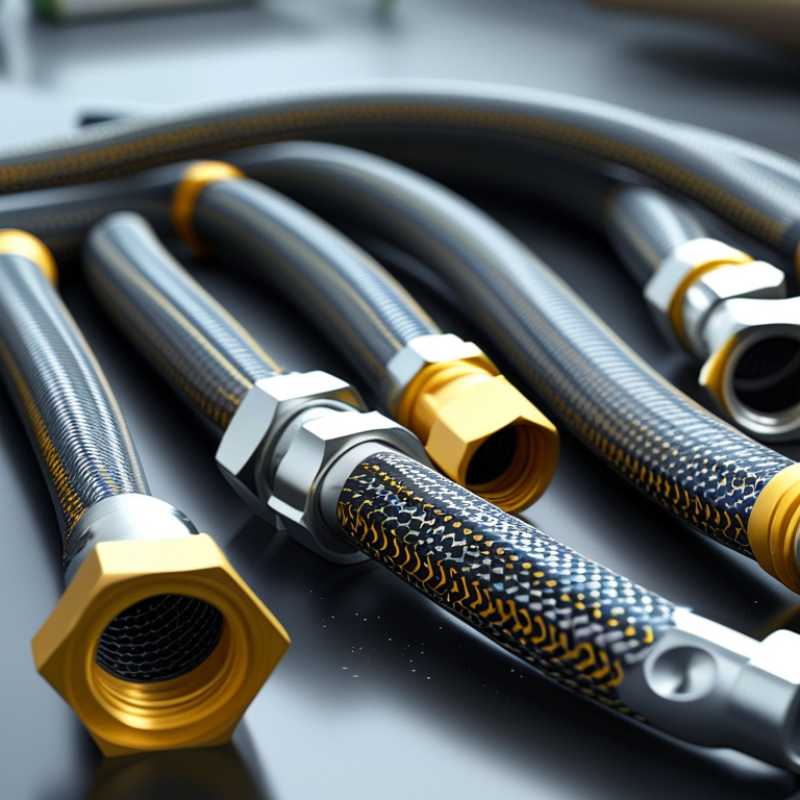
A splitter hose divides one fluid supply into two or more outlets. Its application defines the correct design. Identify the fluid, temperature, pressure, installation space, and connection type before requesting samples. Water for irrigation differs greatly from coolant in industrial equipment. Some applications need flexibility. Others need abrasion resistance, chemical stability, or frequent movement. A hose that looks suitable may still fail after repeated bending. I have seen sourcing projects begin with diameter only. That approach often causes costly revisions.
Define the required flow rate for every outlet in L/min or GPM. For example, a cleaning system may need 12 L/min at one branch and 8 L/min at another. The splitter must support at least 20 L/min, while allowing for pressure loss. Do not confuse maximum flow with normal working flow. Maximum values can hide unstable performance. If your team uses GPM, record the unit clearly because regional conversions create mistakes. Measure actual demand when possible. Estimates are useful, but they are not always reliable.
Tips: Write the application in one sentence. Record total flow and each branch flow. Check pressure at the inlet and outlets. Request test data for leakage, burst pressure, and repeated flexing. Leave a small flow margin, but avoid oversizing without reason. Larger hoses may increase cost and reduce control. Confirm thread standards and dimensional drawings before production. A physical sample can reveal problems that a spreadsheet misses.

How to Choose the Right Splitter Hose for Global Sourcing?
Match Working Pressure with ISO 18752 Classes from 0.5 to 42 MPa
Choosing a splitter hose begins with working pressure, not outside diameter. ISO 18752 provides pressure classes ranging from 0.5 to 42 MPa. Select a class that exceeds the system’s normal operating pressure. Do not treat the maximum rating as a daily target.
Record the highest pressure during startup, shutdown, and sudden valve movement. These short spikes can damage an underspecified hose. Check fluid temperature, ambient heat, bending radius, and movement frequency. A hose rated for 21 MPa at room temperature may perform differently near its temperature limit. This detail is often missed.
The splitter layout also affects service life. Measure each branch carefully, including connection movement and installation tolerance. A tight bend near the fitting can create stress before the system starts. Match the hose, fittings, cover, and reinforcement as one assembly. Request test reports, dimensional data, and traceable batch records from suppliers. These documents support reliable global sourcing.
A practical mistake is choosing the next higher pressure class without checking flexibility. The stronger option may be harder to route and may increase assembly stress. Review the complete duty cycle with the supplier. Pressure is only one part of the decision.
Choosing the right splitter hose for global sourcing starts with its working temperature. A hose exposed to engine heat needs a wider temperature margin than one used indoors. Check continuous temperature, peak temperature, and nearby heat sources. Short heat spikes still matter.
Fluid compatibility is equally important. Nitrile rubber often suits petroleum-based oils and fuels, while EPDM commonly handles water, coolant, and some mild chemicals. FKM can tolerate higher temperatures and demanding fluids, but it is not automatically suitable for every application. Verify the exact fluid, concentration, pressure, and exposure time. A hose may survive the first week and still fail later.
SAE J30 ratings provide a useful reference for automotive fuel, oil, and coolant hose performance. Do not treat the rating as a universal approval. Confirm the specific J30 type, temperature range, pressure capability, wall construction, and dimensional requirements. For a splitter hose, inspect branch angles and connection points carefully. Uneven bending can create local stress. Request test reports, material declarations, production-lot traceability, and sample fittings from suppliers. I once underestimated clamp pressure during a hose review; the material was compatible, but the joint leaked after thermal cycling. That detail changed the inspection checklist. Certification paperwork helps, but physical testing remains necessary. Ask for samples before committing to large international orders.
Global sourcing makes a splitter hose look simple, but small dimensional errors can stop installation. Grand View Research estimated the industrial hose market at over USD 13 billion in 2023. That scale increases supplier choice, not necessarily supplier accuracy. Request a controlled drawing showing overall length, inner diameter, outer diameter, wall thickness, and port locations. Do not treat nominal size as the actual bore.
Bend radius needs practical verification. Ask whether the stated radius is static or dynamic, and whether it applies during pressure, vacuum, or repeated movement. Measure the hose from its neutral axis, not only from the outside edge. A rigid test fixture can reveal flattening near the splitter. ISO 1127 can support tube dimensional checks, while ISO 286-1 provides a useful framework for tolerance grades. These standards do not replace the assembly drawing. They only make assumptions visible.
Splitter ports require equal attention. Confirm NPT, BSPP, BSPT, SAE, or metric threads by thread gauge and sealing method. Pitch can look correct by eye. It can still fail under pressure. Specify thread class, port orientation, and allowable angular deviation. I have seen purchase teams approve samples after checking length only. That is not enough. The ISO Survey 2023 recorded more than 1.2 million ISO 9001 certificates worldwide, yet certification does not guarantee every hose dimension. Require first-article inspection, material records, pressure testing, and a signed tolerance report before shipment. Suppliers may resist. That resistance is useful information.
How to Choose the Right Splitter Hose for Global Sourcing?
Choosing a splitter hose starts with application data, not supplier promises. Confirm inner diameter, working pressure, temperature range, fluid compatibility, and fitting dimensions. A hose can pass a factory test and still fail after repeated bending. I once accepted a lower-priced sample without checking connector tolerance. That mistake caused leakage during installation. Supplier experience matters, but measured evidence matters more.
Audit the supplier’s ISO 9001 system. Review inspection records, corrective actions, calibration dates, and lot traceability. Request material declarations supporting REACH and RoHS compliance. Check whether these documents match the actual hose compound, fittings, and production batch. Ask for test reports from an independent laboratory when risk is high. Certificates may be genuine, yet outdated or incomplete. That deserves a second look.
Tips: Compare total cost, not unit price. Include tooling, samples, testing, packaging, freight, duty, payment fees, inspection, and possible rework. Under Incoterms 2020, confirm who handles transport, insurance, customs clearance, and delivery risk. Request the exact named place in the quotation. A low-cost EXW offer may become expensive after export handling. Keep a written audit trail, photograph samples, and record every deviation before approving the order.
Audit Global Suppliers for ISO 9001, REACH, RoHS, Incoterms 2020, and Total Cost
Verify a current certificate, defined quality procedures, corrective-action records, and traceability for hose materials and assemblies.
For articles containing a Substances of Very High Concern above 0.1% by weight, suppliers must provide required information for safe use.
The commonly applied maximum concentration is 0.1% for most restricted substances and 0.01% for cadmium in homogeneous materials.
Compare freight, insurance, duties, customs handling, payment terms, inspection, packaging, and delivery risk—not only the unit price.