Leave Your Message
Across farms, parks, and open landscapes, irrigation must survive changing weather, uneven terrain, and limited water supplies. An Impulse Sprinkler offers a practical response because its rotating stream can cover wide areas with adjustable intensity. It can also operate effectively in windy or irregular conditions when properly selected.
Dr. Terry Howell, an irrigation efficiency researcher, expresses a useful principle: “Efficient irrigation depends on applying the right amount of water at the right time.” This idea explains the value of an Impulse Sprinkler. Its adjustable nozzle, arc, and operating pressure help growers direct water toward active root zones. A strong metal body can also withstand dust, repeated movement, and long operating seasons. That matters in remote fields.
Not every field needs one.
A large farm may require several sprinkler sizes, pressure checks, and carefully planned spacing. Poor alignment can create dry patches beside unnecessary runoff. High pressure can increase misting and wind drift. These weaknesses are easy to overlook. They also remind users that equipment alone cannot solve irrigation problems.
The real advantage appears when the sprinkler matches the crop, soil, climate, and available water source. In a dry region, a steady rotating pattern can make each operating cycle more predictable. In a small orchard, the same system may need shorter run times and closer placement. Results will vary. Local testing remains essential.
This guide examines why an Impulse Sprinkler continues to support global irrigation, while acknowledging its limits, maintenance needs, and practical installation demands.
Why Choose an Impulse Sprinkler for Global Irrigation?
Agriculture uses about 70% of global freshwater withdrawals, according to FAO AQUASTAT data. UNESCO’s World Water Development Report 2024 places agriculture’s share even higher, at roughly 72% in 2021. These figures make irrigation efficiency a practical necessity, not a marketing phrase.
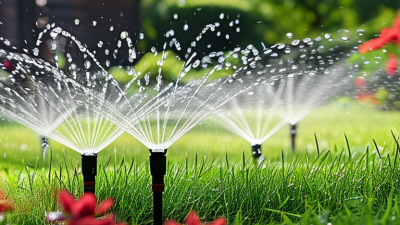
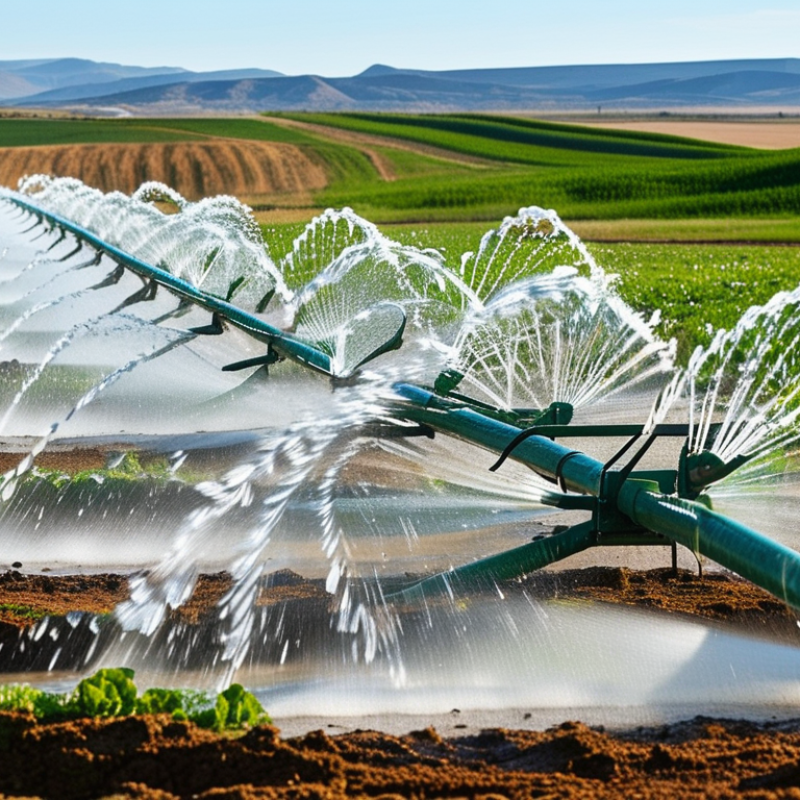
Impulse sprinklers can distribute water across large fields with adjustable arcs and spray ranges. Their rotating action helps apply water in repeated pulses, reducing heavy runoff on many soil types. Field operators can also inspect coverage visually. Dry patches become obvious beside darker, recently watered soil. Pressure still matters. Poor pressure creates uneven droplets and uneven yields.
They are not magic valves.
Wind can carry fine droplets away. High temperatures can increase evaporation. Maintenance is often underestimated, especially around nozzles, seals, and moving joints. The FAO’s guidance on irrigation management stresses that equipment performance depends on scheduling, maintenance, and local field conditions. A sprinkler may perform well in a dry region but waste water under strong wind or excessive pressure.
For global irrigation, the strongest case is practical flexibility. Impulse systems can serve vegetables, pasture, orchards, and smallholder plots when correctly sized. Yet choosing them requires local testing, not assumptions. Measuring catch-can distribution, soil moisture, and operating pressure can reveal weaknesses before they become costly. Water savings begin with accurate observation.
| Dimension | Verified Data or Technical Fact | Why It Matters for Impulse Sprinklers | Practical Irrigation Consideration | Source |
|---|---|---|---|---|
| Agriculture’s share of freshwater withdrawals | Agriculture accounts for approximately 70% of global freshwater withdrawals. | Irrigation equipment can influence how effectively limited water resources are distributed across fields. | Select equipment based on application uniformity, operating pressure, field layout, and local water availability. | FAO, AQUASTAT |
| Contribution of irrigated agriculture | Irrigated agriculture represents roughly 20% of cultivated land but produces about 40% of global food production. | Reliable irrigation can support higher productivity where rainfall is seasonal or insufficient. | Impulse sprinklers are suitable for scheduled irrigation of field crops, pasture, vegetables, and landscaped agricultural areas when system design is appropriate. | FAO, Water for Sustainable Food and Agriculture |
| Water distribution pattern | Impulse sprinklers distribute water through a rotating, intermittent jet and can be configured for part-circle or full-circle coverage. | The rotating pattern can provide broad coverage while allowing field boundaries, roads, and property edges to be respected. | Use correct sprinkler spacing and overlap; the wetted pattern should be evaluated under actual operating conditions. | USDA Natural Resources Conservation Service, Sprinkler Irrigation Guidance |
| Pressure requirement | Impulse sprinklers generally require pressurized water to rotate the mechanism and project water over the target area; exact pressure varies by nozzle and design. | They can be effective where a pump or elevated supply provides stable operating pressure. | Check pump capacity, elevation change, pipe friction, nozzle size, and pressure at the farthest sprinkler before installation. | FAO, Irrigation and Drainage Equipment Guidance |
| Wind sensitivity | Wind can move sprinkler droplets away from the intended application area and reduce distribution uniformity. | Impulse sprinklers can be preferable to systems producing very fine spray droplets, but they are not wind-proof. | Irrigate during calmer periods, use suitable nozzle sizes, and avoid excessive operating pressure that creates unnecessary drift. | USDA NRCS, National Irrigation Guide |
| Field flexibility | Portable, semi-permanent, and fixed sprinkler layouts are established irrigation configurations. | A movable layout can serve multiple plots and seasonal crops without requiring permanent equipment across the entire farm. | Plan hose or pipe routes, access paths, sprinkler locations, and labor requirements for repositioning. | FAO, Irrigation Water Management Training Manual |
| Terrain and slope | Sprinkler systems can irrigate uneven land, but elevation differences change pressure and discharge across the system. | Impulse sprinklers can expand irrigation options where leveling land would be expensive or impractical. | Use pressure regulation, appropriate zoning, and hydraulic calculations to limit overwatering at lower elevations. | USDA NRCS, Sprinkler System Design Standards |
| Water quality and filtration | Suspended solids, algae, and debris can obstruct nozzles and affect discharge uniformity in pressurized irrigation systems. | A robust sprinkler mechanism does not eliminate the need for clean water and routine inspection. | Use an intake screen or filter where required, flush pipelines, and inspect nozzle openings regularly. | FAO, Pressurized Irrigation Techniques |
| Energy use | Sprinkler irrigation requires energy to pressurize and transport water; energy demand increases with lift, friction loss, and operating pressure. | Impulse sprinklers may offer practical coverage, but operating cost must be considered alongside water savings. | Match pump size to the required flow and pressure, minimize unnecessary pipe friction, and schedule irrigation efficiently. | FAO, Energy-Smart Food and Irrigation Guidance |
| Water-use efficiency | No sprinkler type is automatically efficient; performance depends on design, maintenance, pressure, spacing, wind, and irrigation scheduling. | Impulse sprinklers are a viable option when their application rate is compatible with soil infiltration and crop needs. | Measure precipitation rate, check distribution uniformity, avoid runoff, and irrigate according to crop demand and soil moisture. | FAO, Crop Evapotranspiration and Irrigation Management Guidelines |
Note: Global percentages are rounded estimates reported in international water and agriculture assessments. Actual sprinkler performance depends on nozzle selection, pressure, spacing, wind, soil type, crop, and system maintenance.