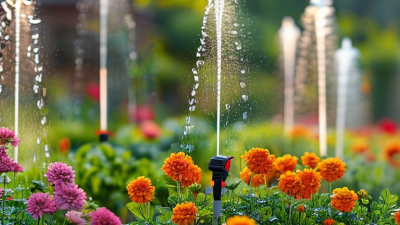
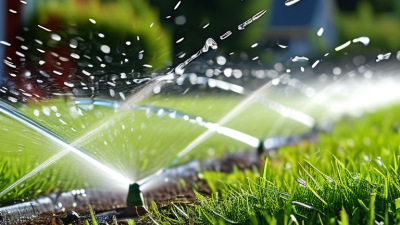
2026 Best ABS Garden Connectors for Global Buyers
Global buyers are paying closer attention to small irrigation components. A garden connector may look simple, yet it controls flow, fit, maintenance, and leakage risk. The 2024 FAO AQUASTAT overview reports that agriculture still accounts for roughly 70% of global freshwater withdrawals. That figure makes efficient garden watering more than a convenience. It becomes a practical purchasing concern.
Recent market analysis from Grand View Research identifies continued growth in irrigation equipment, supported by landscaping, urban gardening, and water-saving projects. Meanwhile, Plastics Europe highlights the importance of material performance, product durability, and responsible plastics management. These findings help explain why an Abs Garden Connector deserves careful evaluation. Buyers should examine ABS grade, wall thickness, thread accuracy, pressure tolerance, UV resistance, and temperature stability. A connector that twists smoothly in a warehouse may crack after months under strong sunlight. Packaging quality matters, too. Missing washers create avoidable complaints.
Water-policy expert Peter Gleick has stated, “There is no water crisis. There is a crisis of managing water.” His observation also applies to garden fittings. Poor connections waste water quietly, often behind soil or decorative mulch. No dramatic failure is needed.
This 2026 guide compares Abs Garden Connector options for international buyers, focusing on measurable performance rather than attractive claims. Supplier test reports, batch consistency, and after-sales support receive attention. However, no connector is perfect for every climate or installation. That limitation deserves more honesty. Product selection should match local water pressure, hose standards, sunlight exposure, and installer experience. Reliable sourcing begins with evidence, not assumptions.
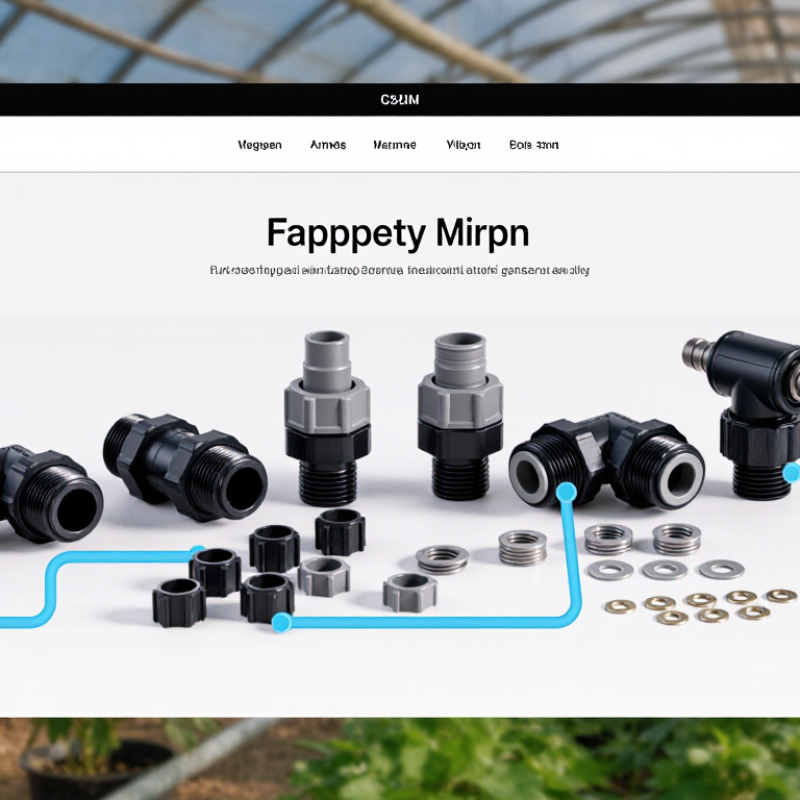
ABS Material Fundamentals: 1.04 g/cm³ Density and 40–60 MPa Strength
ABS is a practical material for garden connectors because it balances low weight with useful mechanical strength.
Its typical density is about 1.04 g/cm³, making fittings easy to handle during installation. A 40–60 MPa strength range is common for well-produced ABS compounds. However, this figure depends on test method, temperature, and specimen design.
In field checks, a connector should feel rigid without becoming brittle. Threaded sections need clean edges, while snap-fit tabs should flex slightly under hand pressure.
ABS also machines and molds accurately, helping create consistent sockets for irrigation frames, plant supports, and hose guides. Ask for test data based on recognized ISO or ASTM methods. Do not rely on a single catalog number.
Outdoor exposure needs closer attention. Standard ABS can lose color and toughness under prolonged ultraviolet radiation, especially in hot, uncovered gardens. UV-stabilized grades may perform better, but actual service life still depends on climate and installation.
Moisture is usually manageable, yet repeated freezing can stress tight joints. I have seen strong connectors fail because the design trapped water inside. That detail is easy to miss.
Strength alone is not enough. Check wall thickness, impact resistance, dimensional tolerance, and the material lot before placing a large international order.
Outdoor Durability: Compare ASTM G154 UV Cycles and ISO 4892 Results
2026 Best ABS Garden Connectors for Global Buyers
Outdoor durability depends on test design, not only exposure hours. ASTM G154 commonly uses fluorescent UV lamps, often with 8 hours of UV at 60°C and 4 hours of condensation at 50°C. This cycle stresses ABS through ultraviolet radiation, heat, and moisture. However, ASTM G154 is a practice, not a pass-or-fail weathering guarantee.
ISO 4892 provides broader laboratory methods, including fluorescent UV and xenon-arc exposure. Its results can better represent daylight spectra when xenon-arc testing is selected. Buyers should request irradiance, black-panel temperature, cycle length, and specimen thickness. Without these details, “1,000 hours tested” means very little. The standards themselves warn that accelerated exposure cannot reliably convert into exact outdoor service years.
For garden connectors, compare color change, surface chalking, impact retention, and thread fit after testing. A practical procurement report should show before-and-after photographs, mass change, and sealing performance. ASTM G154 results may reveal early embrittlement, while ISO 4892 results may expose color shifts under a broader spectrum. Real installations add soil splash, fertilizer residue, and winter cracking. Laboratory data can miss that. I would also test assembled connectors, not flat plaques; this is less convenient, but more honest. Industry weathering guidance consistently recommends multiple exposure methods before approving outdoor plastics (ASTM G154; ISO 4892-2; ISO 4892-3).
Safety Testing: Verify UL 94 Ratings and ISO 527 Tensile Performance
For 2026 ABS garden connectors, safety testing deserves more attention than surface finish.
A connector may look strong while hiding brittle material or inconsistent molding. Global buyers should request current test reports for the exact ABS grade and production batch. Do not rely on a generic supplier declaration.
UL 94 ratings show how a plastic reacts to flame under controlled laboratory conditions. Confirm the stated rating, specimen thickness, test method, and laboratory accreditation. V-0, V-1, and V-2 results are not interchangeable. UL 94 does not measure UV resistance, impact strength, or complete outdoor safety. That limitation is easy to miss.
ISO 527 tensile testing adds practical evidence about strength and elongation. Check the specimen type, testing speed, temperature, humidity, and molding direction. Garden connectors may face pulling, twisting, cold mornings, and repeated assembly. A high tensile value alone cannot predict every field failure. Ask for batch traceability and samples from normal production, not specially prepared pieces.
Inspect the threaded ends and locking tabs. Small flash can create stress points. A simple hand-fit check can reveal more than a polished photograph. In one sourcing review, the report was valid, but the tested thickness differed from the finished connector. That was a warning, not a pass. Buyers should record every discrepancy and request clarification before approving volume production.
Global Buyer Matrix: Compare Pressure, Temperature, Thread, and MOQ Data
2026 Best ABS Garden Connectors for Global Buyers
Global Buyer Matrix: Compare Pressure, Temperature, Thread, and MOQ Data
For irrigation projects, ABS garden connectors should be compared through verified operating data, not appearance. A practical buyer matrix records working pressure, burst pressure, temperature range, thread standard, and minimum order quantity. Pressure ratings often differ between 20°C laboratory tests and outdoor service. That detail matters.
Many connectors support cold-water applications around 0–60°C, but sunlight, pump cycling, and chemical exposure can reduce service life. Ask for pressure values in bar and psi. Confirm whether the rating applies to the connector, seal, or complete assembly. These are not always identical. I have seen attractive specifications hide this gap.
Thread compatibility requires equal care. G, BSP, NPT, and metric threads may look similar but are not automatically interchangeable. Check pitch, sealing method, and mating material before ordering samples. For large irrigation programs, MOQ can range from small cartons to thousands of pieces. A low MOQ may raise unit cost, while a high MOQ can create storage risk.
Build a matrix by destination market, climate, and installation method. Include sample lead time, packaging details, inspection records, and replacement availability. Supplier claims deserve independent checking. A pressure test at the buyer’s expected temperature is more useful than a generic catalog figure. Some data will remain incomplete; record that openly rather than forcing a confident comparison.