2026 Top ABS Sprinkler Types for Global Buyers?
Choosing the right Abs Sprinkler in 2026 requires more than comparing prices, colors, or connection sizes. Global buyers must examine material performance, water quality, operating temperature, installation conditions, and certification records. ABS can offer useful impact resistance and practical handling in selected applications. However, not every ABS sprinkler product is approved for fire protection. That distinction matters.
“Material choice is never separate from approval, installation, and maintenance,” says Dr. Lena Ortiz, a fire-protection materials consultant with field experience in commercial building systems. Her point is simple. A reliable product needs evidence.
This guide examines the leading Abs Sprinkler types considered by international buyers. It compares upright, pendent, sidewall, concealed, and specialty designs where relevant. Each type serves a different water-distribution pattern and installation environment. A warehouse ceiling may need a different solution than a compact utility room. Coastal projects may also face salt exposure, while cold facilities demand closer attention to temperature limits.
Look beyond the product photograph. Review hydraulic data, pressure ratings, temperature ranges, thread quality, gasket materials, and installation instructions. Confirm whether the stated approval applies to the complete assembly, not only one component. Check traceable test reports and consistent batch labeling.
The market is not perfectly tidy. Some listings use “ABS” loosely, creating confusion between plastic bodies, fittings, and complete sprinkler assemblies. Buyers should question unclear claims. A lower price can become expensive after replacement, testing, or project delays.
The best choice balances verified performance, local compatibility, supplier support, and long-term maintenance. That balance may look less exciting, but it protects the decision.
ABS Sprinkler Fundamentals: Materials, Standards, and 57–149°C Ratings
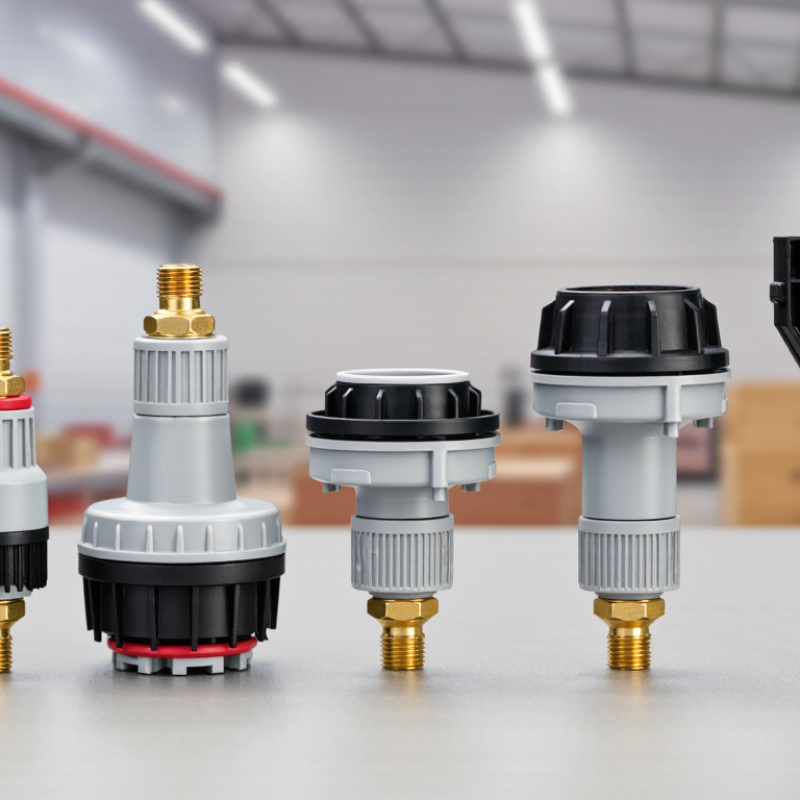
For global buyers, “ABS sprinkler” can describe different products, not one universal category. Some use ABS for external housings, concealed covers, escutcheons, or selected piping components. The polymer is light, impact resistant, and easy to mold. It can soften under heat. That weakness matters. A responsible specification identifies the exact ABS grade, pressure rating, UV resistance, and fire-performance evidence.
Temperature ratings normally identify the sprinkler’s nominal release temperature, not the room’s normal temperature. Common classifications begin near 57°C and may extend through 68, 79, 93, 121, 141, and 149°C. The 57–149°C range is not universal. Actual categories depend on the applicable standard and authority. NFPA 13 installation rules and UL 199 listing practices are widely referenced in many projects. EN 12259-1 may apply to automatic sprinklers in relevant European markets. Check the current edition. A 149°C unit needs credible heat-response testing, not a marketing claim.
During purchasing, request datasheets, listing certificates, hydrostatic pressure data, and batch traceability. Confirm thread size, K-factor, orientation, finish, and replacement requirements. Do not substitute an ABS component into a system approved for another plastic. Field conditions can expose hidden problems, especially sunlight, solvents, vibration, or contaminated water. I have seen specifications focus on temperature while overlooking chemical compatibility. That shortcut can invalidate an otherwise careful design. Local fire authorities may impose additional acceptance requirements.
2026 Top ABS Sprinkler Types for Global Buyers
ABS Sprinkler Fundamentals: Materials, Standards, and 57–149°C Ratings
The chart shows commonly used nominal sprinkler temperature classifications within the 57–149°C range.
ABS is a thermoplastic material and should be used only in sprinkler components or piping systems that are
specifically listed and approved for the intended application. Selection must consider the maximum ambient
temperature, the applicable installation standard, and the product listing.
Reference framework: NFPA 13 and UL 199 temperature classifications. Ordinary-temperature sprinklers are
typically 57–77°C, intermediate-temperature sprinklers 79–107°C, and high-temperature sprinklers 121–149°C.
Always verify local requirements and the exact certified product rating before installation.
ABS Sprinkler Types by Response: RTI ≤50 and RTI >50 Categories
For global buyers, ABS sprinkler selection should begin with Response Time Index (RTI), not color, thread size, or housing appearance. RTI measures thermal sensitivity in (m·s)½. Lower values generally mean faster thermal response. NFPA 13 and ISO 6182-1 testing frameworks commonly distinguish quick-response sprinklers at RTI ≤50 from standard-response sprinklers above 50.
Quick-response ABS sprinklers suit light-hazard offices, schools, hotels, and residential areas where early heat detection matters. A 2022 NFPA report found sprinklers operated in 92% of reported fires large enough to activate them. They were effective in 97% of those cases. That evidence supports faster response, but it does not replace hydraulic design. Ceiling height, spacing, ventilation, and obstruction still matter.
Standard-response ABS sprinklers, with RTI >50, remain practical for storage rooms, workshops, and selected industrial risks. They may tolerate harsher installation conditions, yet “slower” does not mean unsuitable. In practice, a neat table can mislead. Buyers should verify listed RTI values, temperature ratings, discharge coefficients, corrosion data, and installation limits through independent certification documents. ABS can perform well, but material durability depends on heat exposure and chemical surroundings. This is where product assumptions often fail.
2026 Top ABS Sprinkler Types for Global Buyers? – ABS Sprinkler Types by Response: RTI ≤50 and RTI >50 Categories
RTI values and response classifications should always be confirmed against the sprinkler’s current third-party listing, approval documents, and the applicable installation standard.
| Response Category |
RTI Range |
Thermal Sensitivity |
Typical Sprinkler Configurations |
Common Applications |
Primary Buyer Considerations |
| Quick Response |
RTI ≤ 50 |
Fast thermal response; activates earlier than standard-response designs under comparable fire conditions. |
Standard spray, pendent, upright, horizontal sidewall, concealed, and dry-type configurations may be available when specifically listed. |
Light-hazard occupancies, offices, hotels, residential areas, schools, healthcare spaces, and many commercial interiors. |
Confirm listed coverage area, spacing limits, minimum operating pressure, temperature rating, and compatibility with the design standard. |
| Special Response |
RTI > 50 and < 80 |
Intermediate thermal response between quick-response and standard-response categories. |
Often supplied as upright, pendent, or horizontal sidewall sprinklers subject to individual listing conditions. |
Selected commercial, industrial, storage, and process areas where the approved design specifically permits this response category. |
Do not substitute for quick- or standard-response sprinklers without hydraulic, hazard, and listing verification. |
| Standard Response |
RTI ≥ 80 |
Slower thermal response than quick-response sprinklers under comparable fire conditions. |
Standard spray upright, pendent, sidewall, dry-type, and other listed configurations. |
Industrial facilities, warehouses, manufacturing areas, utility spaces, and occupancies designed around standard-response criteria. |
Review commodity classification, storage height, ceiling height, installation orientation, and required discharge density. |
| Fast-Response Special Application |
RTI ≤ 50, with additional application-specific listing criteria |
Quick thermal response combined with a specialized spray pattern or discharge performance. |
Large-orifice, extended-coverage, residential, storage, dry-type, or other specialized listed designs. |
Applications requiring extended coverage, specialized water distribution, concealed installation, or specific architectural coordination. |
Check the complete listing, obstruction rules, maximum spacing, orientation, water demand, and permitted hazard classifications. |
Technical note: RTI means Response Time Index and is used to describe sprinkler thermal sensitivity. The RTI category alone does not determine suitability. Final selection also depends on hazard classification, sprinkler orientation, temperature rating, coverage, water supply, installation environment, and the requirements of the applicable fire-protection standard.
Orifice and Flow Selection: Comparing K5.6, K8.0, and K11.2 Sprinklers
For buyers evaluating ABS sprinkler systems in 2026, K-factor selection should begin with hydraulic demand, not price. The K5.6 sprinkler suits many light-hazard applications with moderate flow requirements. K8.0 delivers more water at the same pressure. K11.2 can support higher-demand areas, but it may require larger piping and stronger water supplies.
The basic relationship is Q = K√P, using the correct units for the selected standard. At 7 bar, a K5.6 sprinkler discharges about 14.8 units of flow, while K11.2 discharges nearly 29.6. Pressure matters. However, orifice size alone does not determine protection. Designers must check hazard classification, spacing, temperature rating, response type, ceiling height, and approved installation orientation.
From practical purchasing reviews, a common mistake is choosing K11.2 for “extra safety” without checking the pump curve. That decision can increase pipe costs and still fail the design objective. A K5.6 layout may be more suitable when spacing and water supply are limited. K8.0 often provides a workable middle position, though assumptions can fail in obstructed ceilings or storage areas.
Buyers should request certification, material compatibility data, thread details, flow coefficients, and tested temperature limits. ABS components also need confirmation for pressure, heat, and chemical exposure. Small details matter. Field verification remains essential.
Global Installation Choices: 1/2-Inch, 3/4-Inch, Upright, and Concealed Models
For global buyers, ABS sprinkler installations require more than matching pipe size to a catalog image. A 1/2-inch model suits compact rooms and lower-flow layouts when hydraulic calculations support it. A 3/4-inch model can deliver greater flow for larger coverage areas. The correct choice depends on K-factor, pressure, spacing, ceiling height, and water temperature.
Upright sprinklers remain practical in exposed ceilings, warehouses, and plant rooms. Their deflectors sit above the pipe, directing water downward across open areas. Concealed sprinklers create a cleaner ceiling line. A cover plate hides the assembly until activation, which helps in hotels, offices, and finished interiors. However, concealed designs demand careful ceiling coordination. Paint, insulation, or incorrect cover plates can affect performance.
Installation details matter more than appearance. Confirm thread type, connection dimensions, orientation, temperature rating, and approved material compatibility before ordering. Local authorities may require specific certifications and fire-test listings. Do not assume an ABS component is suitable for every water-based system. That assumption can become expensive.
Field experience also shows a common weakness: buyers often choose 1/2-inch units only because they cost less. That decision may restrict coverage or require higher pressure. A 3/4-inch option is not automatically better either. It may increase cost without improving protection in a small, hydraulically balanced room. Review the drawings, check the flow calculations, and leave room for inspection access. Small details matter.
Buyer Compliance Checklist: NFPA 13, UL 199, FM Approval, and 175-psi Limits
For global buyers, ABS sprinkler selection should begin with compliance, not appearance. Confirm whether the sprinkler type is pendent, upright, sidewall, or concealed. NFPA 13 defines placement, spacing, temperature ratings, and hydraulic design requirements. It does not replace product certification. Ask for current test reports and installation instructions.
UL 199
listing verifies that automatic sprinklers meet defined performance requirements.
FM Approval
provides another recognized route for fire protection acceptance, but approval must match the exact model, temperature rating, orifice, and orientation. Check every document carefully. A similar-looking sprinkler may have different limits.
The 175-psi requirement deserves special attention. Confirm that the marked working pressure is at least 175 psi under the intended system conditions. Do not confuse working pressure with test pressure or short-term surge pressure. That mistake can become expensive.
Tips:
Request a certificate, datasheet, approval directory entry, and traceable production code. Compare them line by line. Inspectors often notice missing details before buyers do. In practice, paperwork gaps happen, even with experienced suppliers. I would also verify ABS material compatibility with water quality, ambient temperature, and pipe connections. Field conditions can be less predictable than drawings. Keep a sample label and installation photo in the project file. This small habit improves traceability and reduces disputes during commissioning.